
Whale Worship in Vietnam's Coastal Lore
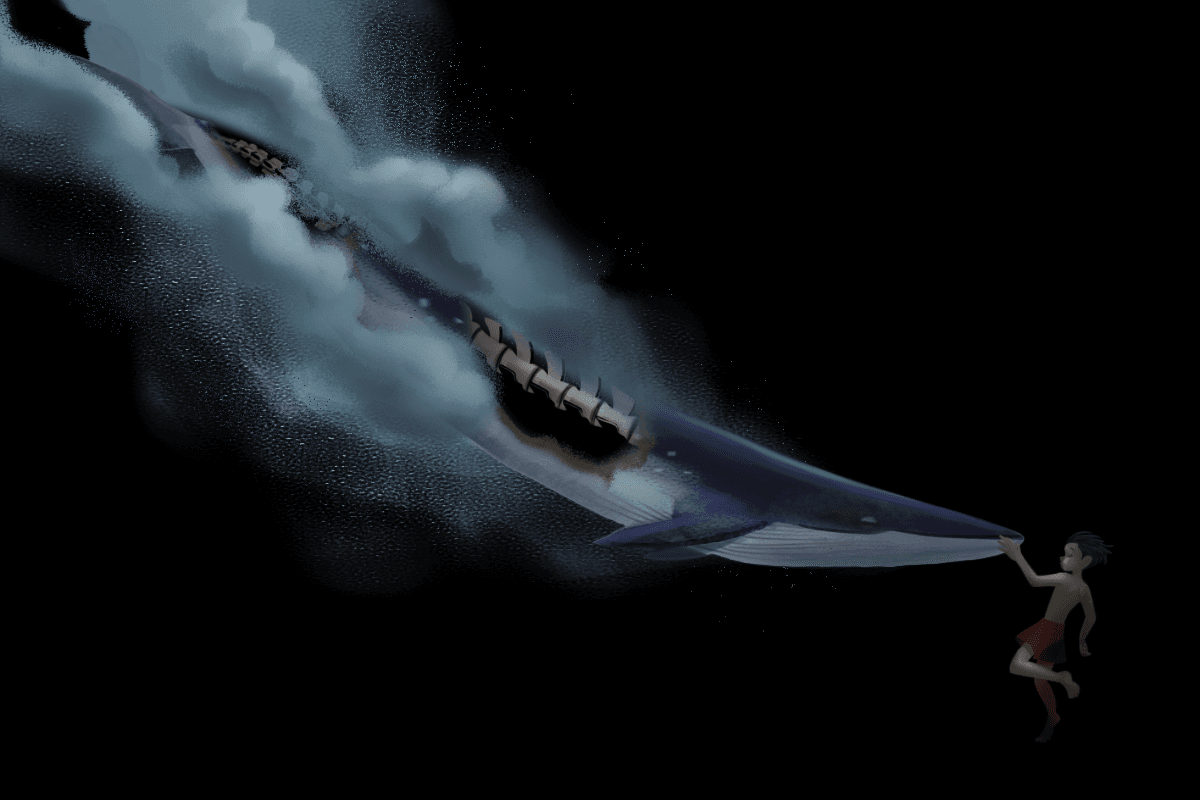
There are many stories about whales saving people in Vietnam. For example, a man named Mùi was saved by a whale in 2016. He was out drinking with a friend and their boat sank. A whale came and saved him. Mùi is very thankful to the whale and prays to Cá Ông. He believes that whales can save people and bring them good luck.
A painting in Vũng Tàu's whale temple shows a whale.
I learned about Vietnam's whale worship tradition from a photo caption. I wanted to learn more about this tradition, so I went to the sea. I talked to some people who live near the sea and they told me about their beliefs.
I visited a whale graveyard near Vũng Tàu. It's a special place where people bury whales that have washed up on the beach. The graveyard is like a big park with many graves.
A woman was putting flowers and food on the graves in the whale graveyard.
The woman I met at the graveyard told me that she comes from a family of fishermen. She leaves offerings on the graves to ensure that her family has a good catch. She also prays to Cá Ông to keep her family safe at sea.
Mùi, the old fisherman, has been taking care of the graveyard for seven years. He told me that whales don't just save people from drowning. They also help fishermen who are in trouble. For example, some fishermen were caught by the authorities, but they prayed to Cá Ông and were able to escape.
A scholar named Sandra Lantz studied whale worship in central Vietnam. She found many stories about whales saving people. For example, a man named Ly was fishing when a big storm came. He prayed to Cá Ông and the storm went away. A whale came and saved him.
According to Lantz, Cá Ông helps fishermen who die at sea by bringing their souls back to land. If the souls can't get back to land, they will wander the sea forever.
Some people think that whales help humans because they are kind. But scientists say that whales might be helping themselves, not humans. Whales might lean on boats to stay safe during storms.
The Phước Hải graveyard has many graves, each with a whale's body. Some of the whales are small, only 1.5 meters long. The villagers don't know what kind of whales they are, but they still bury them with respect.
A big burial mound in Phước Hải Village whale graveyard.
One grave in Phước Hải stands out because it's very big. A huge whale washed up on the beach in 2017. The villagers had to use a crane to move it to the graveyard.
Mùi told me that the big whale had saved many ships before it died. But when it failed to save one ship, it killed itself out of shame. This is a legend that the villagers believe.
An altar dedicated to Cá Ông at the Phước Hải Village whale graveyard.
When a whale dies, the villagers give it a big funeral. They play music, offer food and drinks, and pray to Cá Ông. The whale is put in a special coffin and buried in the graveyard.
According to some believers, the first person to find a dead whale gets good luck. But only old people should bury the whale, because the whale's spirit might still be alive.
Cá Ông altar in Phước Hải.
The villagers take care of the whale graves for three years. They leave offerings and pray to Cá Ông. After three years, the bones are dug up and taken to a special temple.
Altar base filled with cetacean bones.
I visited the Lăng Ông temple in Phước Hải. It's a special place for whale worship. The temple has a big altar with whale statues and bones.
Entrance to the Vũng Tàu temple dedicated to Cá Ông.
The Vũng Tàu temple is very old, built in 1824. It has many whale bones and a big whale skeleton. The temple is a place for people to pray to Cá Ông and ask for good luck.
Thứ Hải, a monk at the Vũng Tàu whale temple.
Thứ Hải told me that everyone in the area knows about Cá Ông and comes to the temple to pray. He showed me old photos of whale funerals and festivals.
The villagers have a big festival every year to honor Cá Ông. They offer food, pray, and have boat races. It's a time for people to come together and celebrate.
Some people believe in superstitions about Cá Ông. For example, they don't eat certain foods that might scare whales away. They also don't wear jewelry that might hurt whales.
At Phước Hải Village whale graveyard manager Mùi (left) and his friend Ngọc (right).
Mùi told me that some people follow dietary restrictions, but it's not a big deal. He said that people are free to choose what they believe. The Vũng Tàu monk also said that there are no strict rules about food or offerings.
The origin of whale worship in Vietnam is not clear. Some people think it came from the Chăm and Khmer people who lived in the area a long time ago.
Buddhism also has a story about whales. According to legend, a bodhisattva created whales to save fishermen. The whales were given elephant bones to make them strong.
The future of whale worship is not clear. Some people are worried that the tradition will disappear as younger generations move to cities. Climate change is also a threat to the whale graveyards.
Whale spinal bones at Phước Hải Lăng Ông.
Mùi doesn't think that whale worship will disappear. He said that people are proud of the tradition and will pass it down to their children. The Vũng Tàu monk also said that he hasn't seen a decline in worshipers.
The government has recognized whale worship as an important part of Vietnamese culture. They have given money to restore temples and promote the tradition.
Whale skeleton displayed in Vũng Tàu.
It's easy to romanticize whale worship, but it's not clear if it's really about saving whales. The tradition might be more about human beliefs than about helping whales.
Many whales die because of human activities. They get caught in nets and drown. It's sad to think that whales are dying because of what humans do.
I felt conflicted about whale worship. On one hand, I respect the tradition and the whales. But on the other hand, I wonder if it's really helping the whales. Should we be asking whales to kill themselves to save us?
Ultimately, it's not my place to decide. I prayed to Cá Ông and hoped for the best for the whales and the villagers.
This article was originally published in 2018.