

A Japanese Island with a Dark Past
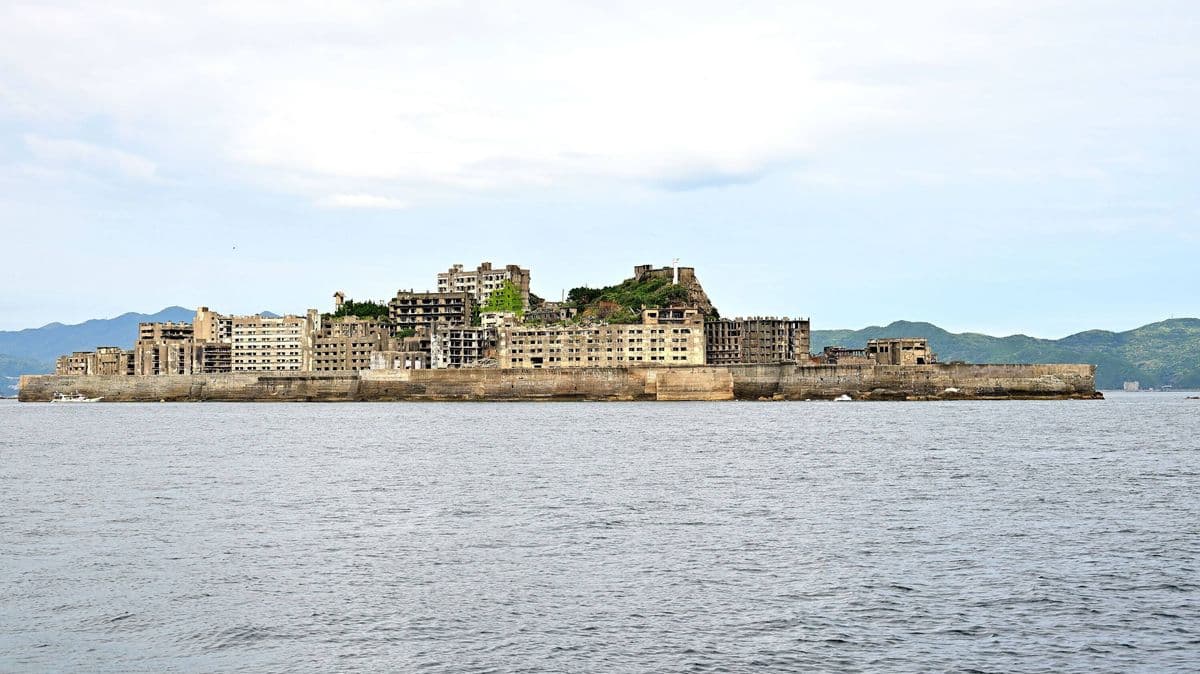
A long time ago, this island in Japan was a busy town with many coal mines. Now, the sea is taking over the island, and nature is reclaiming it. The island has a sad past, so maybe it's good that it's empty now.
Hashima Island is near Nagasaki, and it used to be a place where people mined for coal. At its peak, over 5,000 people lived there in tall apartment buildings, which are still visible today.
The island was known for its coal mines under the sea, but it also has a very troubling history.
Mitsubishi bought the island and started building apartments for workers in 1916. There was a school, a kindergarten, and a hospital on the island.
People on the island could go to the movies or shop for fun.
After World War 2, prisoners from China and Korea were forced to work on the island, building or mining. They had very bad conditions and were treated poorly by Mitsubishi.
The city was abandoned when the coal mining industry ended.
Many prisoners died from exhaustion and starvation, with numbers ranging from 137 to 1,300.
The people who worked on the island called it 'Jail Island' or 'Hell Island', which is very different from what it seemed to be. By the 1970s, the coal was almost gone, and the industry was dying.
This led to many residents leaving the island, and by the mid-1970s, the mine was closed, leaving the island empty.
In 2009, Japan asked for the island to be added to the UNESCO World Heritage List.
But this move was criticized by North and South Korea and China, who said it would disrespect the survivors of forced labor.
Eventually, South Korea and Japan made a deal to include the island on the list if Japan acknowledged the use of forced labor.
However, in 2021, it was found that Japan had not kept its promise to provide information about the forced labor.
The museum in Nagasaki that tells the island's story does not have any accounts from Koreans about forced labor or discrimination, and the only Korean testimony on display says that forced labor was never used.