

Should We Wear Face Masks?
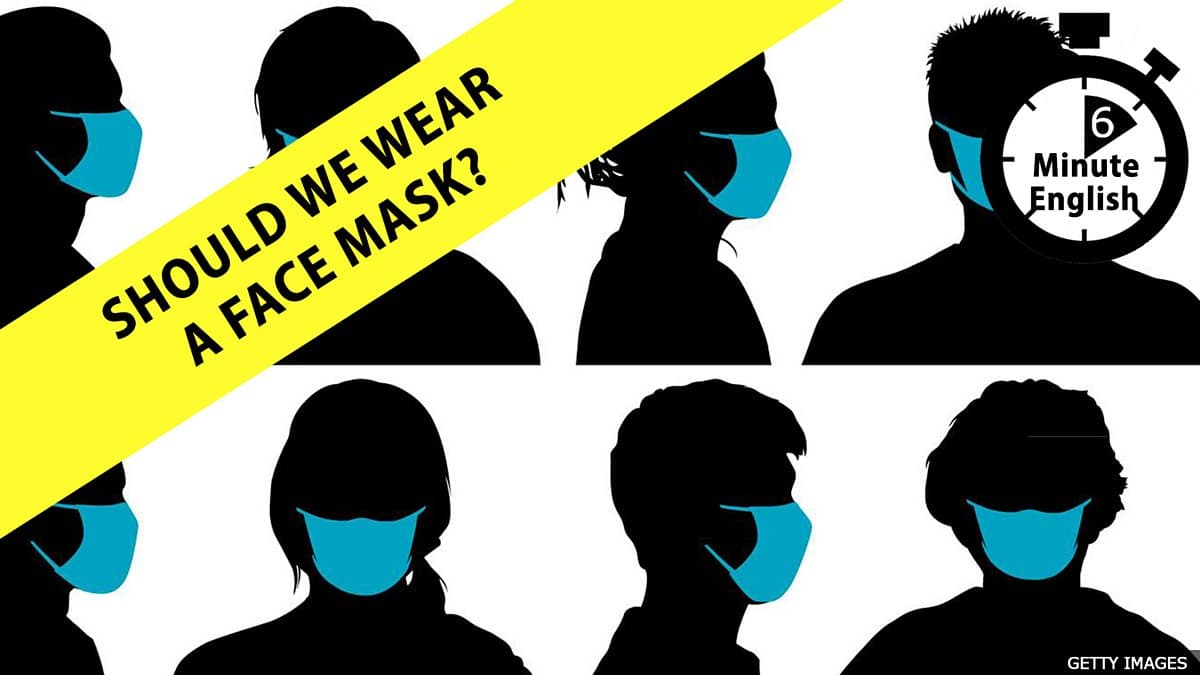
The coronavirus outbreak has led to people wearing face masks worldwide to protect themselves and others. Rob and Sam discuss whether masks can help prevent the spread of coronavirus.
When were face masks first widely used?
a) 1855 in Vienna
b) 1905 in Chicago
c) 1955 in London
Listen to the programme to find out.
Some words have unclear meanings.
Something is obviously true from the facts.
A heated debate is a discussion where people get angry.
Emitting means sending out something like a virus.
Mask shaming is criticizing someone for not wearing a mask.
A false sense of security is believing you are safe when you are not.
This is not a word-for-word transcript.
Rob introduces the programme.
Sam introduces himself.
Rob explains the topic of face masks.
Sam talks about face masks in Asian countries.
Rob asks when face masks were first used.
a) 1855 in Vienna
b) 1905 in Chicago
c) 1955 in London
Sam answers the quiz question.
Rob discusses the history of face masks.
Professor Robert West talks about face masks.
The evidence on face masks is unclear.
Rob explains the meaning of equivocal.
Sam talks about the evidence on face masks.
Rob discusses the benefits and drawbacks of face masks.
Sam explains the World Health Organisation's advice.
Rob talks about people who have the virus without knowing it.
The WHO advice on face masks changed in June.
Sam discusses the advantages and disadvantages of face masks.
Professor Robert West explains the negative consequences of face masks.
Rob talks about mask shaming.
Sam discusses the false sense of security created by face masks.
Rob answers the quiz question.
Sam is correct about the answer.
Rob explains the correct answer.
Sam finds the answer interesting.
Rob summarizes the discussion on face masks.
The evidence on face masks is still unclear.
Sam talks about the benefits of face masks.
Rob discusses the disagreement over face masks.
Sam explains the concept of mask shaming.
Rob talks about the false sense of security created by face masks.
Sam concludes the programme.
Rob says goodbye.
Sam says goodbye.