

Sanfilippo syndrome - tragedy of ‘childhood dementia’ and its early warning signs

Mirror
Imagine Alzheimer’s and dementia... but in young children.
That is how experts describe Sanfilippo Syndrome. Children born with the disease develop normally at first but as the disease progresses, they start to have problems speaking, learning and walking. They develop behavioural problems such as hyperactivity, anxiety and difficulty sleeping. Eventually children lose their ability to speak and move and die young, usually during their teens.
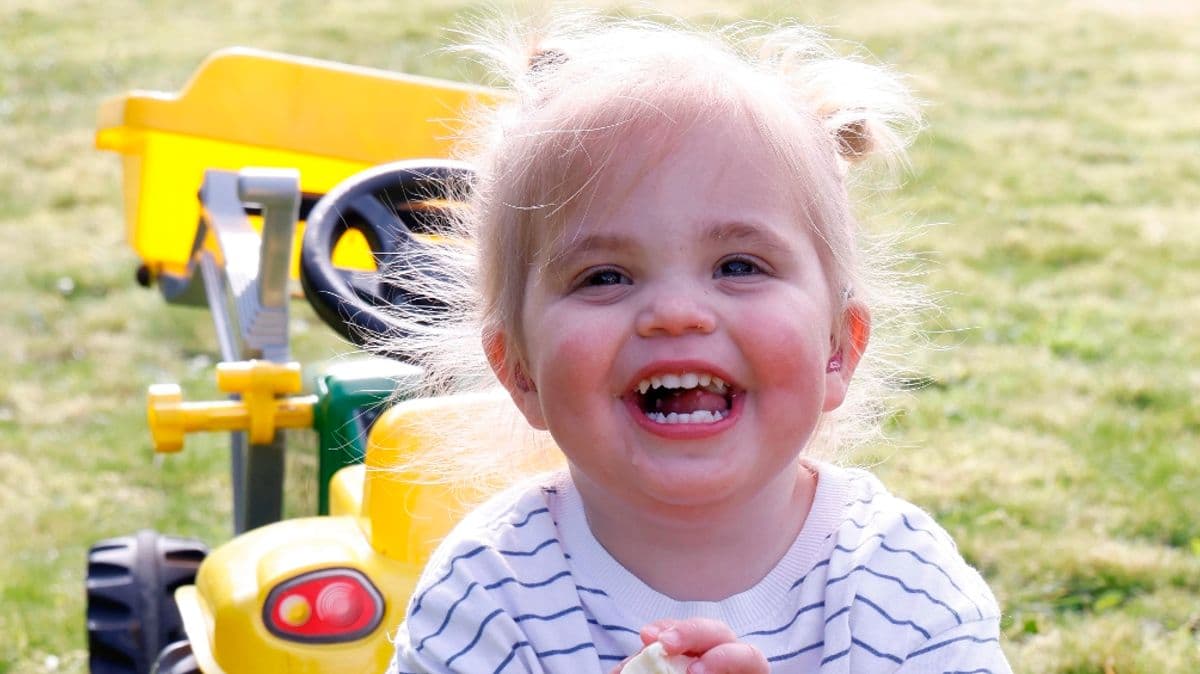
The Mirror has reported the story of two-year-old Leni Forrester who has the condition and whose parents are now on an urgent mission to fund research into a potential cure before it is too late.
Mum Emily, 33, and dad Gus, 35, only discovered there might be a problem when routine genetic screening for Emily's sister flagged a rare gene. It was the start of a long journey which resulted in the devastating diagnosis for Leni before any symptoms had started to show.
Leni was diagnosed five months ago(Image: ITV)
Leni was diagnosed after her aunt flagged that she was a carrier(Image: ITV)
Children with Sanfilippo Syndrome have a genetic mutation meaning that an enzyme called sulfamidase cannot break down complex sugar molecules properly. These molecules build up in cells within the brain and nervous system to have a gradual and devastating impact on their development.
Emily and Gus, of Sevenoaks, Kent, who have been together for 13 years, told how Leni's diagnosis journey all started at 15-months-old when Emily's sister was flagged as a carrier for the NAGLU gene so there was a 50% chance Emily was too.
The odds that their child would be affected were still incredibly low - Gus would have to be a carrier too - but this turned out to be the case. Subtle and seemingly innocuous tell-tale signed in Lenni's case included bushy eyebrows, thick eyelashes, full lips and a condition called talipase meaning she was born with feet slightly turning inwards.
Emily explained because the condition is so rare most Sanfilippo children are only diagnosed once they significantly lose their cognitive and movement skills as initial symptoms are often misdiagnosed as autism or ADHD.
Tragically, it is only when the children who suffer from the disorder start to lose all motor function that a genetic investigation usually takes place(Image: STEVE FINN PHOTOGRAPHY)
The couple were initially wrongly given the all-clear(Image: STEVE FINN PHOTOGRAPHY)
It is estimated that Sanfilippo Syndrome affects 1 in every 70,000 births but prevalence could be higher. The true number will only be known when Sanfilippo is included in newborn screening, which is unlikely until there is an effective treatment on the market proven to work in clinical trials.
The Cure Sanfilippo Foundation says signs are usually there in the newborn period of a child’s life but typically begin to be recognised between the ages of one and six. It says early symptoms can be dismissed and families reassured that the child “will grow out of it.”
The foundation says that if more than one of the following signs or symptoms are noted then it is important to consider checking for Sanfilippo.
Children with the syndrome frequently appear healthy in early childhood(Image: STEVE FINN PHOTOGRAPHY)
Four subtypes of Sanfilippo, or Mucopolysaccharidosis type III, have been identified – Types A, B, C, and D. The subtypes can also be referred to as MPS IIIA, MPS IIIB, MPS IIIC, and MPS IIID or Sanfilippo A, Sanfilippo B, Sanfilippo C, and Sanfilippo D.
Each subtype corresponds to a particular enzyme that is missing or not working properly in the body’s process of breaking down heparan sulfate. Type A is the most common subtype, making up more than half of the cases. Types B and C are less common, and Type D is the rarest.
Type A is typically considered the most-severe subtype of Sanfilippo with earlier loss of abilities, such as talking and walking and an earlier age of death. Type B may progress less rapidly on average while types C and D have more variable progression rates but most patients tend to retain skills longer than in A and B.
Leni Forrester has Type B. Her parents have spoken about how there are two potentially life-saving experimental treatments out there but are stuck in the clinical trial process. Emily and Gus have explained how, with such rare conditions, there is not much money to be made by pharmaceutical companies.
The first treatment was the subject of a successful clinical trial at Great Ormond Street for several years and saw the symptoms completely stopped with a weekly enzyme delivered through a port in their brains. However this trial ran out of funding in 2017. The second is a gene replacement therapy that in similar conditions has been hailed as a total cure.
There is currently no cure available in the UK(Image: STEVE FINN PHOTOGRAPHY)
The gene replacement trial will cost £5.5 million and could help six children. Now Emily and Gus are trying to help fundraise to cover the pre-clinical costs to get it to trial .
Earlier this month, Emily and Leni met with popstar Jesy Nelson. The former Little Mix star invited the pair to a Mother's Day photoshoot to help raise awareness of rare conditions, after going through her own heartbreak with her twins, who have been diagnosed with SMA1.
Emily said: "S he's trying to pull everyone along with her and like shine a spotlight on the difficulties that everyone faces. So she's super inspirational but also just a really genuine, lovely person. Leni loved it, she's such a little diva. She absolutely loved the cameras. It was a great day."
Emily and Leni met with Jesy Nelson recently
Jesy is also full of praise for Emily and the adorable Leni, telling the Mirror: "Meeting Leni and her mum, Emily, really stayed with me. Leni is such a beautiful, happy little girl, and you can just feel how loved she is. Spending time with them was incredibly emotional, because it’s so hard to understand how something like this can happen to such a young child.
"Emily is amazing so strong and so devoted but no parent should have to fight this hard just to get their child the treatment they need. It’s heartbreaking. If sharing Leni's story can help raise awareness or make even the smallest difference, then it's so important we all come together and support them. Children like Leni deserve every chance at life. I'm sending all my love to Leni and her family."
A Department of Health and Social Care spokesperson said: "Our thoughts are with all those living with dementia and rare conditions including Sanfilippo syndrome.
"We are making sure patients with rare diseases, like Sanfilippo syndrome, get a definite diagnosis faster, while improving access to specialist care, treatment and drugs. At the same time we are working hard to find new ways to slow down the progress of the dementia, speed up diagnosis and improve our understanding of the disease.”
Donate to Leni's GoFundMe and help save her life at this link, you can also follow the family's journey on TikTok here