

Understanding Nam Le's Poetry Collection
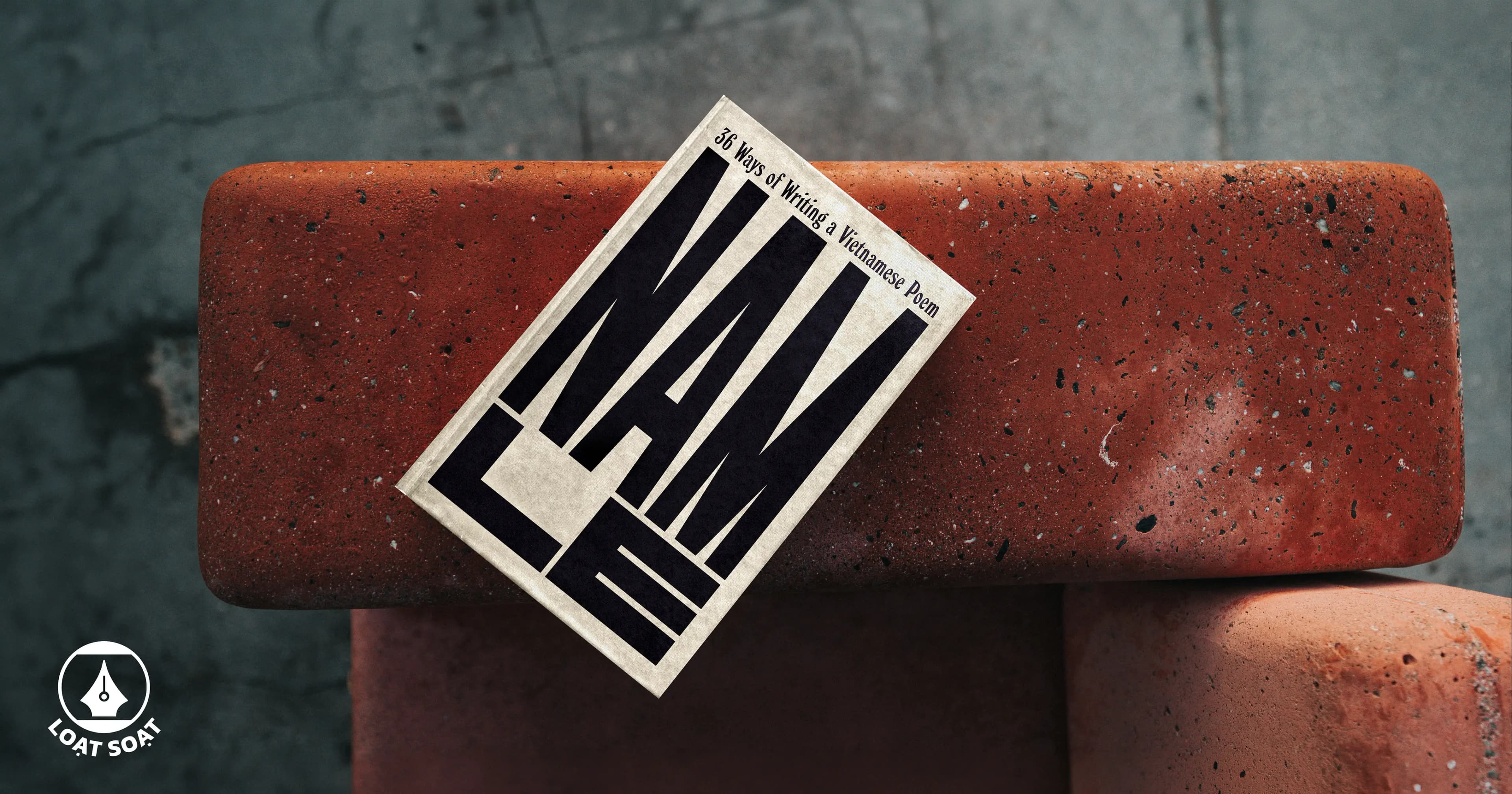
Nam Le, a Vietnamese-Australian writer, questions these typical stories in his poetry collection, 36 Ways of Writing a Vietnamese Poem. The book is funny and experimental, with each poem numbered and themed to be part of a larger whole. Le explores what it means to write as a Vietnamese writer and the expectations that come with it.
Le writes, 'Whatever I write is Vietnamese.' This statement is both freeing and limiting. It means that no matter what he writes, it will be seen as Vietnamese, which can be both a good and a bad thing.
The first poem in the collection, 'Diasporic,' starts with the lines 'In English, mind You. You dink I writee Yiknamee?' This poem talks about the violence of the English language and how it can be used to hurt people.
Le's poems often use racist language to show how harmful it can be. However, some poems may not be meant to be taken literally. For example, the poem 'Titrative' asks if it's possible to write without thinking about how others will react.
The poem 'Evasive' is interesting because it uses erasure poems and a subtitle that says 'ERASURE RHYMES WITH ASIA.' Le says he wants readers to see the humor in this and to think about how we read and write.
Le's use of the phrase 'ERASURE RHYMES WITH ASIA' is meant to be humorous, but it can also be seen as perpetuating orientalist ideas. This is because it implies that Asia is somehow connected to erasure, which is not a positive association.
The problem with reading Le's poems as simply being against the English language is that it overlooks the complexity of his work. Many of his poems are meant to be read in a way that is not literal, but rather playful and thought-provoking.
In one essay, Som-Mai Nguyen talks about how some Vietnamese diasporic writers use linguistic tricks to sound more authentic. However, this can come across as insincere or even racist.
Le's poem 'Dire critical' seems to do the same thing, using the example of the tonal variations of 'ma' to make Vietnamese sound more exotic. But is he being serious or is he parodying this kind of writing?
The poem 'Reclamatory: 2' complicates things further by suggesting that some images associated with orientalism have been used for millennia and cannot be reduced to simple stereotypes.
In the end, it's hard to say what Le means by his poems. Is he being serious or is he joking? The point may be that it's impossible to escape clichés and stereotypes, and that they will always be a part of how we think and write.
The collection actually contains 37 poems, not 36. The last poem, 'Post-racial / -glacial,' imagines a world where words do not have to mean more than what they say. However, even in this poem, the word 'escape' can be seen as having a deeper meaning, especially given Le's own background of coming to Australia from Vietnam.