

Bilingual Chemistry Lessons Turn English Practice into Sustainable Problem‑Solving
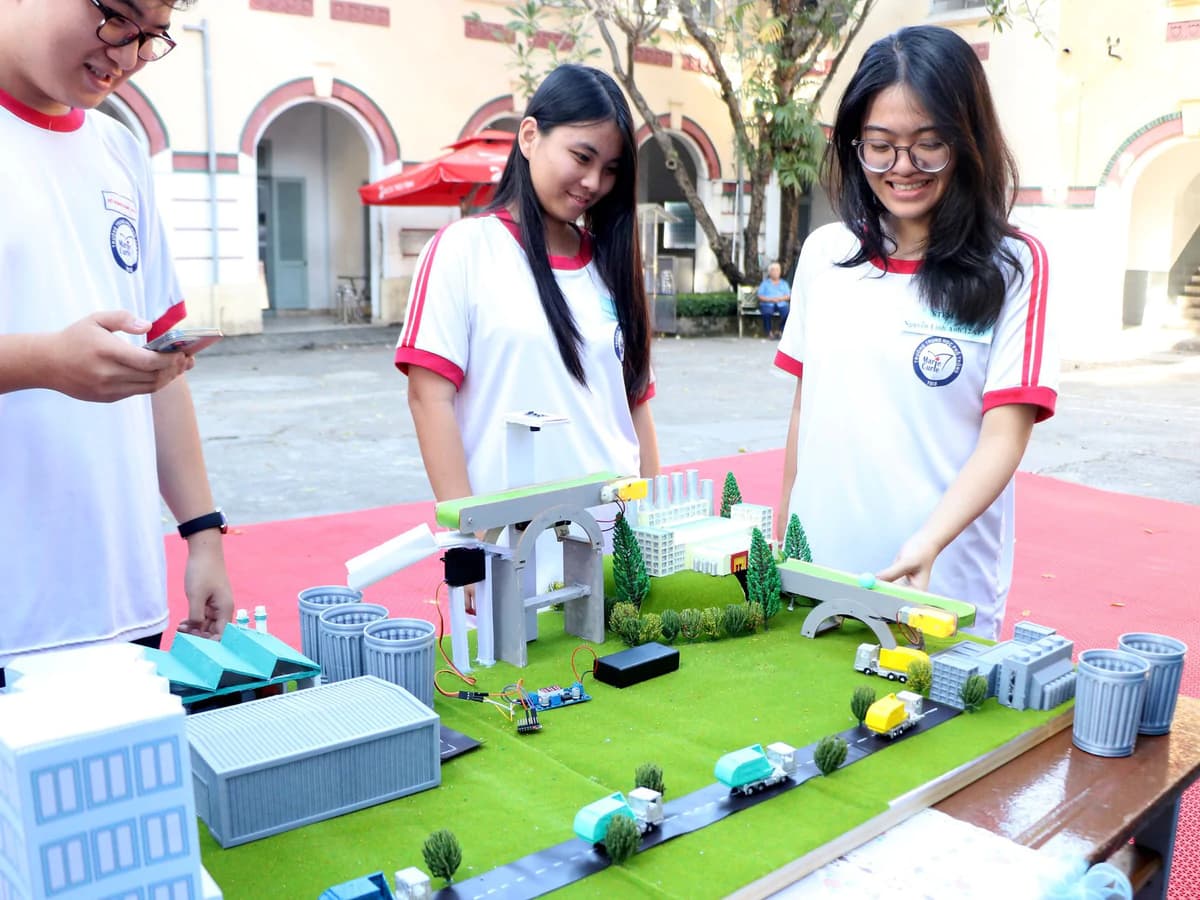
More than 120 grade‑12 students at Marie Curie High School took part in a demonstration lesson called “From Polymers to a Sustainable Future,” using English to debate plastic pollution and explore sustainable solutions. During the session, students rotated between booths, presenting their products and describing the materials in English. Visitors recorded what they learned in a digital worksheet known as a “polymer passport.”
After the exhibition, the lesson continued with a mock courtroom trial where students argued the responsibility for plastic waste. It also featured a simulated “Shark Tank” in which six students acted as investors, evaluating projects on chemistry, creativity and sustainability. These role‑plays required participants to use scientific English while judging real‑world ideas.
Chemistry teachers worked with English teachers before the lesson to review presentations, prepare vocabulary lists and rehearse questions and answers. They said the biggest challenge was the uneven English proficiency among students, with some speaking fluently and others feeling hesitant. The teachers emphasized the need for regular English use to build confidence.
Students said the bilingual format helped them practice scientific terminology in English and link chemistry ideas to everyday life. Their comments show that learning chemistry through English can boost both language fluency and problem‑solving skills.