

How Vinahouse Helps Queer Communities Feel Belonging in Modern Saigon
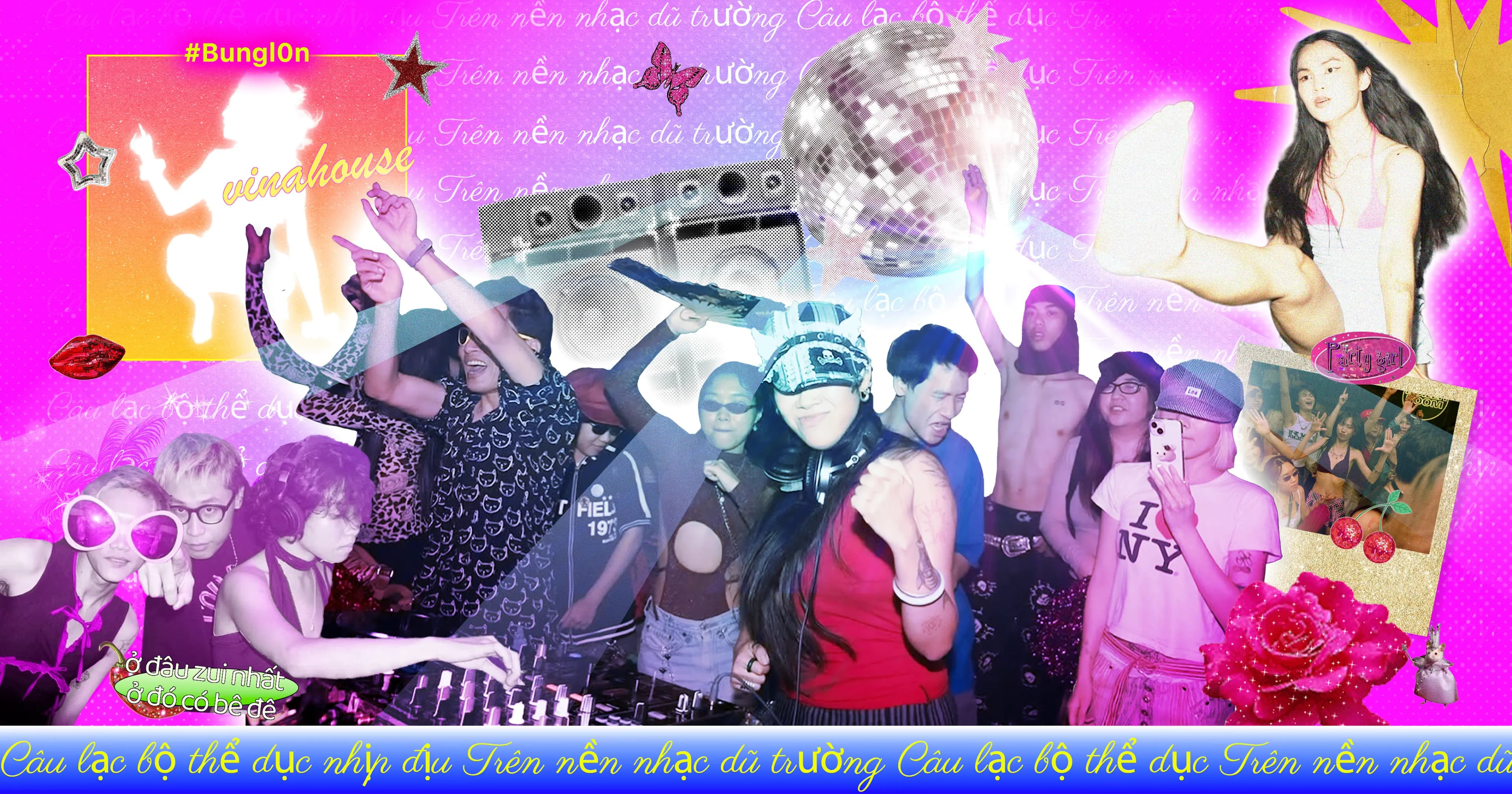
Although Vinahouse is heard everywhere, it is still placed low in the main music rankings. The style becomes most visible when we look at Saigon’s queer nightlife. Queer groups such as Bung L0n take the music and turn it into a sign of belonging and local queer expression, pushing back against the preference for Western EDM. By following how Vinahouse moves through city sounds and queer clubs, and by listening to the people who live the scene, we can see how the genre helps build a shared queer identity in a fast‑changing city.
Young people in Saigon out and about in 1994. Photo by Ed Kashi.
Vinahouse first appeared in the late 1990s and early 2000s as a local version of Euro‑American house, trance and hard‑dance music. It grew through remixing, illegal copies of songs and club culture in Vietnam’s quickly expanding cities. The style soon became part of everyday celebrations such as clubs, weddings and informal parties. Even though it is very popular, many Vietnamese critics say it lacks polish, originality or artistic depth.
Quỳnh Chi loves Vinahouse, and her listening habits sparked my own interest. She said, “People often teach us that middle‑class listeners should not enjoy Vinahouse.” Queer nightlife in Vietnam is also seen as uncertain and fragile. Homosexuality was decriminalized early and attitudes are slowly changing, but queer spaces still rely on secrecy and occasional visibility. In Saigon, clubs and pop‑up events have become key places where queer people seek safety, intimacy and belonging. Music is not only entertainment; it also builds bonds and lets people express themselves. In these settings, Vinahouse is reshaped into a local sound of belonging, turning the dance floor into a central queer social space.
A gathering of queer Vietnamese in 1990. Photo by Catherine Karnow.
During Vietnam’s rapid urban growth in the 1990s, EDM was quickly adapted to fill a gap in the local music scene. Vinahouse heavily borrows global EDM structures while mixing V‑pop melodies, bolero and local lyrics. The style first became popular with the Đôn Chề (Dolce) subculture, known for its distinct fashion. Soon, the beats spread to neighborhood cafés, wedding tents and roadside speakers, becoming part of the everyday soundscape rather than a separate genre. This spread, both physical and digital, creates a musical intimacy built on repetition and recognition.
Dancing in the club in Vietnam in the 1990s.
What critics call “derivative” can also be seen as an important aesthetic that values familiarity. Saigon’s dense club scene, informal venues and flexible social atmosphere let hybrid music forms grow. Yet even here, Vinahouse is still looked down upon by “elite” clubs that favor techno and other globally praised electronic styles. Mainstream talk often compares “white” or “Western” electronic music—seen as serious and sophisticated—with Vinahouse, which is labeled trẻ trâu (childish) or bay phòng (drug‑party music).
Queer nightlife in Saigon offers a key place to reclaim Vinahouse from these hierarchies. In these spaces, the local flavor of the genre becomes an advantage, not a stigma. Trí Nguyễn (also known as Smoothie Boiz), co‑founder and DJ of Bung L0n, said he began to put Vinahouse more centrally in his sets to assert Vietnamese identity in clubs that were otherwise dominated by foreign sounds. This change is not a rejection of global club culture but a local adaptation of it. Early Bung L0n events relied more on techno and international styles; only later did they add Vinahouse.
Đôn Chề is a subculture rooted in fashion, street life, and social media trends.
“After a while we thought, ‘We are Vietnamese, why not play more of our own music?’ … each of our parties has a Vietnamese theme, and not having Vinahouse felt wrong,” Trí said. He added that when Vietnamese tracks were played, participants seemed to enjoy the music more and felt a stronger sense of familiarity, moving more in rhythm. Reclaiming the local is therefore less about cultural protest and more about emotional resonance.
Bung L0n started after COVID‑19 as a nightlife collective responding to a lack of inclusive queer spaces in Saigon. A small group of friends with little DJ experience founded the collective, which now hosts underground parties for LGBTQ+ members such as Vấp Cục Đá and Gái Nhảy. Trí says the group does not claim to represent a single “community”; instead, they aim to make people feel comfortable being themselves, without restriction, because “where it’s hot, the queers hit the spot.” This avoidance of overt politics is important. While dance floors are often praised as automatically liberating, they also hide gender, sexual and racial exclusions. Bung L0n’s approach acknowledges these limits without repeating them, allowing queer visibility to emerge through atmosphere rather than declaration.
An event organized by Bung L0n. Photos by @captain_____bipolar via Instagram page bung_l0n.
Linh Phạm, who has attended many queer raves, sees Bung L0n events as places of care, intimacy and “becoming.” Extravagant dress, makeup and bodily expression let participants safely live identities that may be impossible in daily life. The raves become “transcendental” and “liminal” spaces. Exclusion felt by queer people in straight‑dominated clubs is not only caused by sound but also by the overall atmosphere and layout. When scenes move or are reshaped—like in queer nightlife—the atmosphere changes, gatekeeping boundaries shift, and different bodies feel welcomed. This collective “becoming” is essential to the experience.
While those spaces often celebrate individuality, Linh notes that “individuality in Bung L0n is interconnected.” Individual expression is relational, with many different styles sharing the same platform. Vinahouse provides a common cultural language that ties these differences together. When a familiar Vinahouse track appears unexpectedly, the dance floor reacts strongly, with participants singing along and gaining energy, turning solo dancing into collective vocalization. These moments are powerful not because of technical skill but because of shared “sonic memory.” Dancing is both an individual and collective act, making the floor feel like one organism where personal and group experiences merge, similar to spiritual or religious feeling.
Vinahouse’s familiar sounds let listeners feel linked to each other. This connection does not happen automatically; performers and organizers carefully nurture it. Trí notes that too much Vinahouse can push some listeners away, while too little weakens the local feel. This careful curation shows an awareness of the genre’s contested status and how kinship is created through deliberate work rather than assumed.
The emotional power of Vinahouse in queer nightlife comes from its sound itself. Tempo, texture and volume shape the body’s experience. High beats and predictable patterns create cycles of tension and release that echo EDM’s build‑up and drop sections; the drop brings listeners “home” after a pause, heightening pleasure through contrast.
In queer raves, this return brings bodies back to a shared cultural space when familiar melodies and lyrics reappear after long techno sections. Texture also matters. Dense bass combined with melodic lines invites listeners to feel the music physically, not just hear it. This tactile immersion blurs the line between self and crowd, creating deep embodied intimacy. Volume adds to this by reducing distance. Vinahouse is often described as louder and more bustling than other electronic styles, a quality Trí says instantly signals “Vietnamese house.” This loudness is not just auditory but social, demanding participation.
Bung L0n’s anniversary event. Photos by @ilang.tmp via Instagram page @bung_l0n.
Therefore, musical traits are often less about the sound itself and more about the atmosphere they create. In Bung L0n events, Vinahouse’s sonic qualities help build an inclusive atmosphere by drowning out self‑consciousness and social monitoring, letting queer bodies move freely without constant self‑watching.
Vinahouse helps link Vietnamese cultural identity with queer expression, challenging dominant stories. Queerness in Vietnam is often described as Western, while Vinahouse is seen as stubbornly local or even anti‑Western. Their meeting in nightlife spaces unsettles both ideas. As Chi says, Vinahouse is excessive and outside the norm, making it “queer” on its own; at the same time, queer communities want a local grounding instead of Western norms of sexuality and club culture.
Vinahouse has become a way to “localize” Western club culture into something uniquely Vietnamese, said Linh, who also shared a Vinahouse playlist on Spotify with Chi and me. These moments of localization are not mainly ideological, as ideologies fade inside the rave, replaced by what Chi calls “embodied,” “carceral,” and “more felt” experiences. Yet the effects are still political, allowing participants to live queerness without rejecting cultural belonging. In this sense, Vinahouse in queer nightlife shakes both the music hierarchy and the social hierarchy of sexuality, showing that queer expression in Vietnam does not need Western sounds to be clear or meaningful. Vinahouse can act as a medium for queer belonging that is locally rooted, felt through the senses, and kept alive together. At the same time, the genre does not solve the tension between cultural hierarchy and sexual marginalization, but it makes them temporarily livable. Its importance lies not in overcoming stigma but in living within it, turning what is dismissed as low, repetitive, or unserious into a shared language of joy, recognition and care.