

From French Soldier’s Lunchbox to Vietnam’s Nostalgic Meal Box: The Story of the Cà Mên
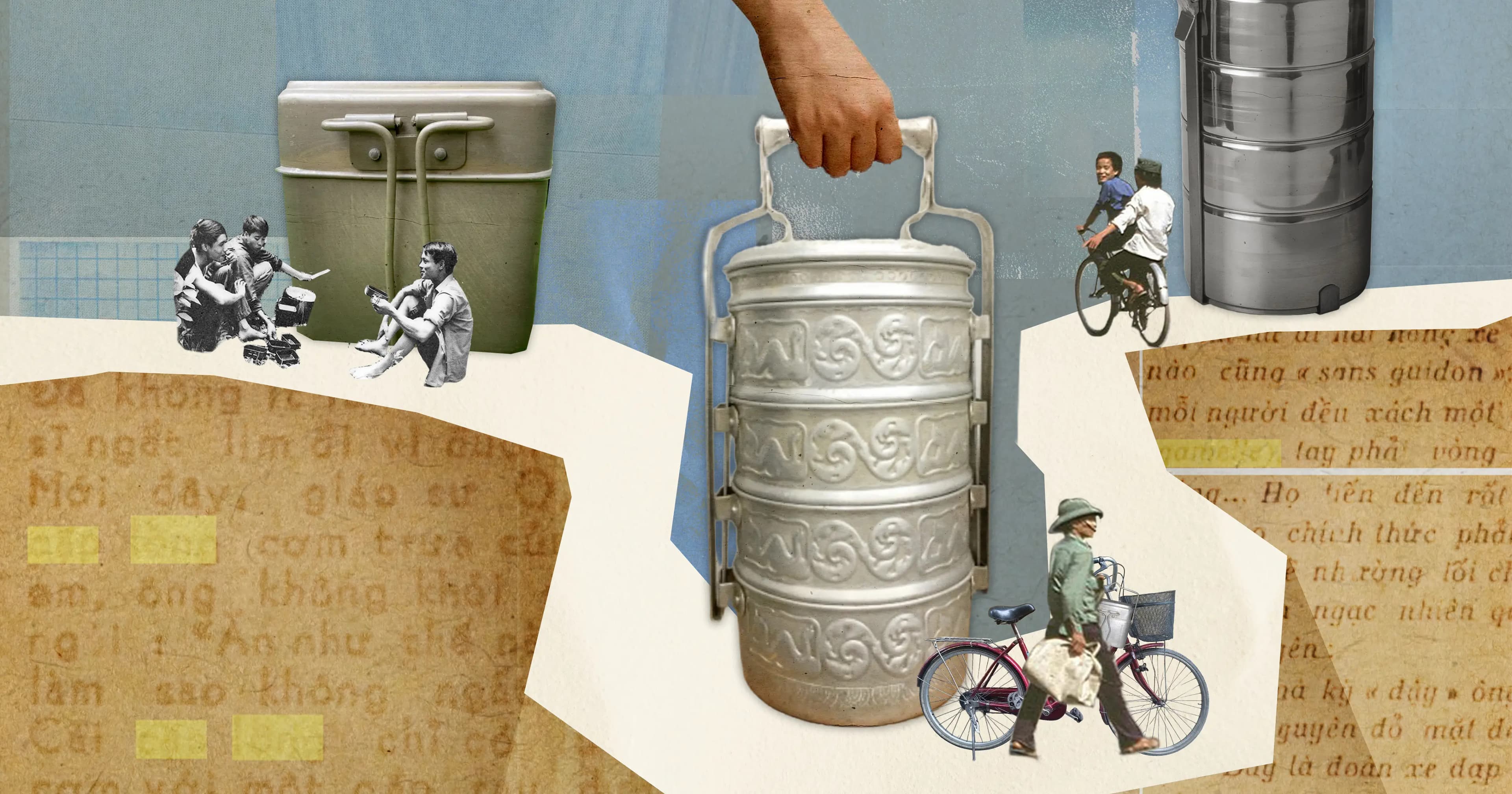
The cà mên traces its roots to the French “gamelle,” a term that itself comes from the Latin “camella,” meaning cup or bowl. French manufacturers began producing these metal boxes for soldiers in the mid‑19th century.
During the French occupation, the lunchbox became a common sight in Saigon’s cơm tháng eateries, where workers could pay for a month’s meals. A 1938 satire newspaper, Vịt Đực, even showed French housewives riding bicycles with a cà mên to deliver meals to their husbands.
Vietnamese soldiers later adapted the box for combat. They painted it or wrapped it in fabric so that reflected flares would not give away their positions. The sturdy containers stored rations, heated food, and served as makeshift bowls on the front lines.
In the 1970s‑80s subsidy era, rice was extremely scarce. Historian Đặng Phong noted that in March 1978 Hanoians could buy only 4 kg of rice per month. Writer Đỗ Phấn recalled that when a poorly‑filled cà mên fell, the rice‑and‑noodle mixture rolled out like a cake across the street, showing how little was left to eat.
After the Đổi Mới reforms, the cà mên did not disappear. It stayed popular in casual rice eateries and was used as a prop in the film Quán Kỳ Nam, where layered meals were presented in four‑ and five‑compartment boxes, reminding viewers of its practical charm.
The evolution of the cà mên mirrors Vietnam’s history: a colonial import turned wartime necessity, a symbol of scarcity during the planned‑economy years, and today a nostalgic reminder of resilience and everyday ingenuity.