

The End of Oak Street: Understanding the Ending
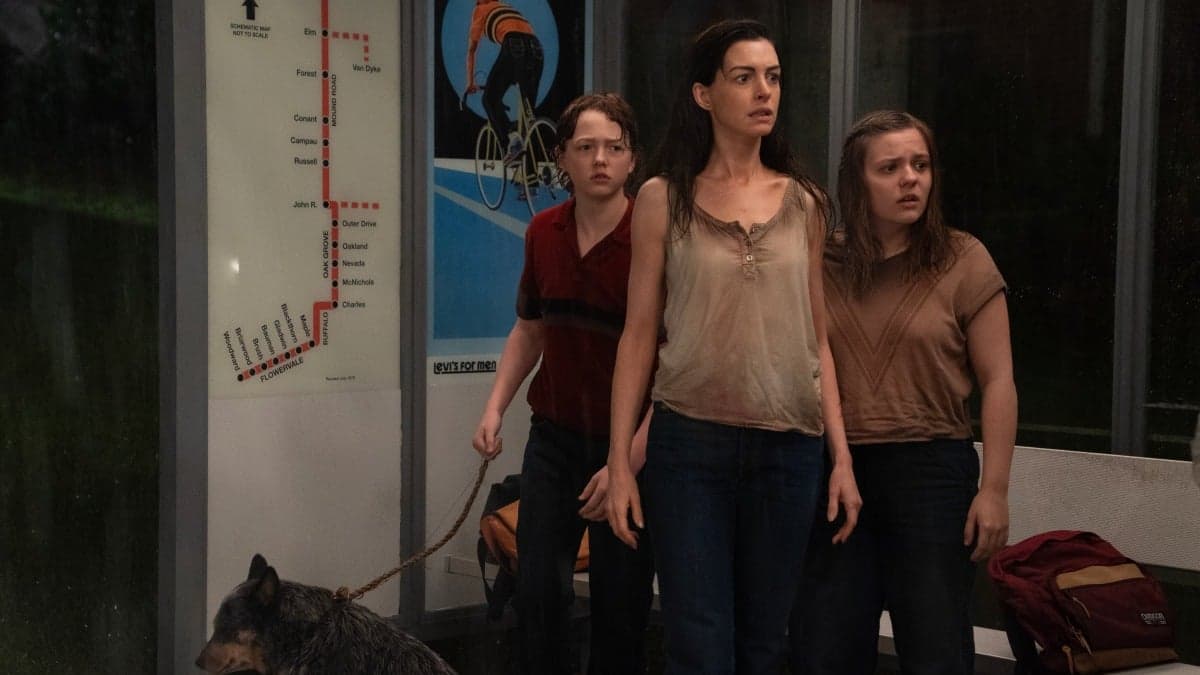
Dinosaurs start appearing in their streets and homes, and their neighbors are killed. This is a very strange and scary situation for the Platts.
The movie's ending can be confusing, so let's try to understand it. The ending is about what happens to the Platt family after they experience time travel.
Let's start explaining the ending now.
At the beginning of the movie, there's a news report about NASA studying time anomalies. But the Platt family doesn't pay attention to it because they're busy with their own problems.
The first person to notice something strange is the mother, Denise. She sees a weird plant in her friend's backyard that grows very fast. A librarian helps her identify the plant as being from 200 million years ago.
Later, there are flashing lights in the sky, and the family's dog notices them. The lights are like portals to another time, and when a big light appears, the neighborhood is transported back in time to the age of dinosaurs.
The Platt family must fight to survive against the dinosaurs. They find a shiny orb that they think is a portal back to their time, and they try to reach it.
After the father, Greg, is eaten by a T. rex, Denise and the kids go to the librarian's house to find a portal. They encounter more dinosaurs, but the librarian helps them.
The librarian sacrifices herself to save the Platts, and they jump through a portal to find themselves in a swimming pool. A woman tells them it's July 11, 1982, which is the same day their neighborhood was taken by a portal.
The Platts look down at their neighborhood and wonder if there are other versions of themselves down there. They also realize that Greg is still alive in this timeline.
The family tries to figure out what to do with the short time they have. Denise tells the kids to go to the hills where the portal won't reach, and she makes some phone calls.
Denise's phone calls are important for the ending, but we don't know what she says. The family waits at a bus stop, and then a familiar vehicle arrives with a pizza delivery.
The family is reunited, and the movie jumps to a year later.
News reports talk about the neighborhood being replaced by one from millions of years ago. The authorities capture or kill the dinosaurs, and some residents give testimonials about Denise's heroism.
Denise's book about her unhappy marriage is lost, but she writes a new book called The End of Oak Street.
The movie doesn't explain the time travel clearly. It's not clear if it's a time loop or an alternate timeline.
The Platt family traveled back in time and returned home. Denise saves Greg by calling him to the hills, but she also dooms another version of herself and her kids.
If Denise hadn't saved Greg, she would likely have been eaten by the T. rex. The movie suggests that the family needs each other to survive.
The family's survival is also dependent on Denise's actions. If she hadn't prevented Greg from going back in time, they might not have made it back to the future.
The movie might not be a time-loop story. Perhaps Denise created an alternate timeline and pulled Greg into it, giving them a happy ending.
The final scene shows the family happy together, with photos of them smiling. They're joined by their neighbor Jeannette and her parents for a barbecue.
But what about the version of Greg who died? Does the living Greg feel guilty for being with Denise while another version of their family is doomed?
The movie doesn't explore these questions, leaving the audience to wonder.
The ending is like those of old movies that try to make the audience feel better after a scary story. It's a happy ending, but it feels forced and unrealistic.
Old movies like The Bad Seed and Invasion of the Body Snatchers had similar endings that tried to comfort the audience. But now, such endings feel fake and annoying.
The End of Oak Street is now in theaters.
Topics Film