

Young Artists Bring Đờn Ca Tài Tử to New Places
There is a bar with a Mekong theme.
Every Saturday, cải lương is performed, which is a part of our heritage.
You can also talk to the Đờn Ca Đó Đây group beside the show.
It's like a Mekong corner in the middle of tall buildings.
I saw an interesting post on social media about a đờn ca tài tử experience in a city bar. I was curious because I grew up listening to Mekong Delta folk music. The venue is one of many places where Đờn Ca Đó Đây performs. They are a group of young Vietnamese who want to promote southern đờn ca tài tử arts in Saigon.
Đờn ca tài tử has been around for over a hundred years. It started from ceremonial music in Huế and was influenced by folk music in the south. It reflects the feelings and lives of people in the south. The end of the 19th century was the peak of đờn ca tài tử, with many melodies and techniques created.
A đờn ca tài tử group performed in Saigon in 1911.
I talked to Đỗ Thanh Phong, the leader of Đờn Ca Đó Đây, while I was visiting my hometown. We talked about his stories and the group's music. The settings were different, but the melodies connected us.
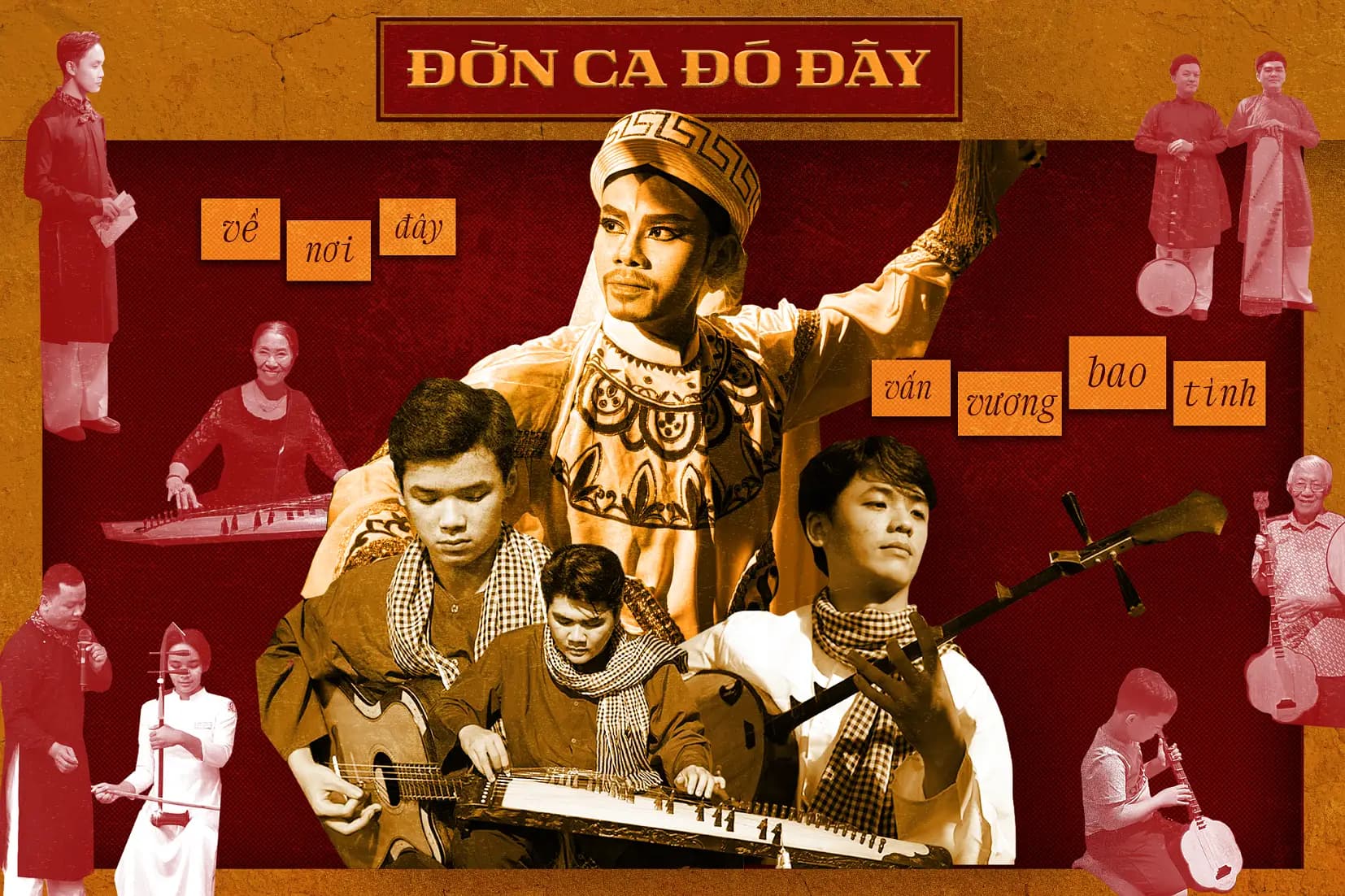
These are the members of Đờn Ca Đó Đây.
Phong has a busy office job, but he still works hard to keep folk arts alive. He can play the đàn tranh and helps the group with direction and cohesion.
Đờn Ca Đó Đây started with impromptu performances.
Phong remembered the early days at Lê Văn Tám Park, where they first played together. The music and vocals created a special space for art.
The group practices at a cafe.
From simple setups, Đờn Ca Đó Đây grew. The members come from different backgrounds and share a passion for đờn ca tài tử. They met on social media and started performing at casual venues like bars and schools.
Đờn Ca Đó Đây performed at Hai Tô Bar.
Many members were found through chance encounters. Phong met one member on TikTok, and they started talking about music. When the member moved to the city, Phong connected him with the group.
Another member uses his teaching skills to help with school outreach programs. He writes scripts and plans content to make it accessible and educational.
The group promotes đờn ca tài tử to younger generations at schools.
The name Đờn Ca Đó Đây means performing here and there. They can perform anywhere and make music a two-way interaction between performers and spectators.
Đờn ca tài tử was not a planned destination for many members, but it brought back childhood memories. They didn't have professional music training, but their experiences fostered a fondness for the music.
During the pandemic, some members explored their connection to đờn ca tài tử deeper and started learning and practicing.
The group knows that đờn ca tài tử has a stigma of being old and sentimental. But they believe this is not inherent to the music, but rather how it's presented. They try to make it relevant to modern society by adjusting the content and execution.
Audience members can join in during interaction sessions.
The performances at bars are highly interactive, with actors improvising their scripts.
The group writes new lyrics based on traditional melodies, depicting contemporary southern provinces. These compositions retain the spirit of the original version.
Phong showed me a paragraph about Vĩnh Long, set to the tune of 'Lý Đêm Trăng'.
Vĩnh Long has been renewed from today.
Alongside Trà Vinh and Bến Tre, it's a land of coconut trees.
Together, we can build our hometown.
Come and visit Ao Bà Om.
Go to the old kilns of Mang Thít.
Drop by the fruit groves of Cái Mơn.
Wherever you go, don't forget our beloved home.
Vĩnh Long is lovely, our home.
In another video, Phong showed how the group interacted with the audience through new lyrics sung to 'Lý Chim Xanh'.
My home is at the bottom tip of Cà Mau.
I adore this land of Đất Mũi at the south of the map.
In Năm Căn, there's an unforgettable song; in Đầm Dơi, a lovely place.
There are endless green mangroves in U Minh, where love runs deep.
Keeping an independent folk music troupe is not easy. Phong says the biggest struggle is finding places to perform and interact with the audience. Official venues don't prioritize grassroots performers, so their activities are often spontaneous.
The group performed at the 'Thanh Kiều' exhibition.
Despite hurdles, the positive reception from Saigoneers motivates Đờn Ca Đó Đây. Phong tells about a woman who gifted them áo bà ba to boost the authenticity of the performances.
A fan sent the group southern checkered scarves, and someone else donated colorful áo ba ba. Clothing items like áo dài and khăn đóng arrived from across the country to keep their morale high.
Phong met a Việt Kiều at a performance, which moved him to tears. The group was invited to participate in cultural exchange programs. At public parks, older people would stop by to listen to music and tear up seeing young people in touch with folk music.
Through their performances, Đờn Ca Đó Đây learned that the true value of their music is not how it's performed, but whether it's performed with sincerity and can bring people together. Đờn ca tài tử and cải lương will continue to exist if that spirit is treasured and sustained.