

Why Ignoring Neck Injuries Can Be Dangerous
Nguy hiểm khi bỏ qua chấn thương vùng cổ
Nguồn: Tuoitre
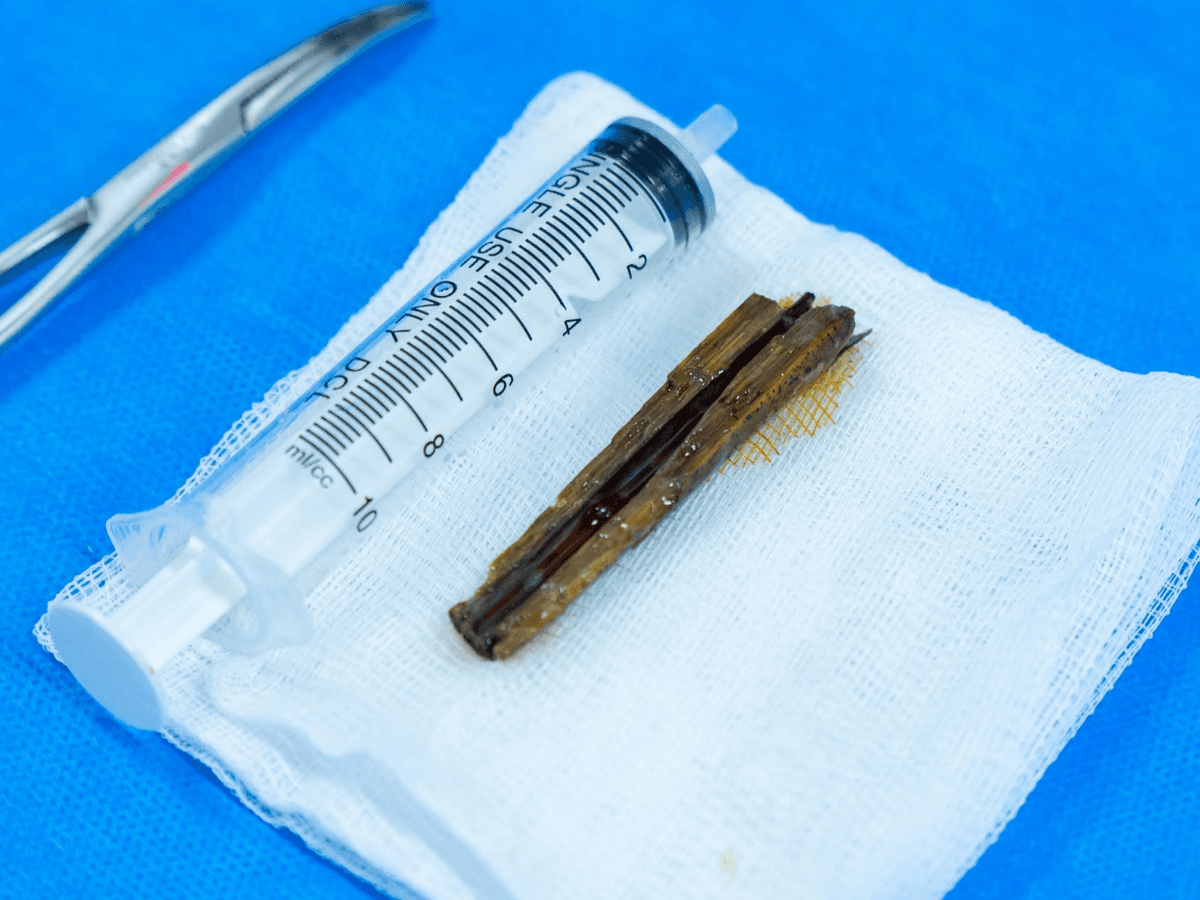
Doctors at Military Hospital 120 in Dong Thap Province recently removed a ten‑centimetre bamboo splinter from a 66‑year‑old man's neck. The story highlights how a wound that appears to heal can become life‑threatening if follow‑up care is ignored.
Three months earlier the man fell onto a bamboo bush, striking his neck and causing severe bleeding. After first aid he was transferred to a higher‑level hospital, where doctors performed a tracheostomy because he was in respiratory distress, and they initially decided the splinter could not be safely removed.
The patient was discharged after his condition stabilised, but he missed all scheduled follow‑up appointments for the next three months. During that time the bamboo fragment slowly migrated toward the skin, producing increasing pain, swelling, pus discharge and a return of breathing difficulties.
When he finally returned to Military Hospital 120, doctors recommended emergency surgery. Senior Lieutenant Colonel Le Thanh Mon, head of the general surgery department, led a team that extracted the nearly ten‑centimetre splinter without harming any vital neck structures such as blood vessels or the carotid artery.
Doctors urge the public not to underestimate injuries, even when wounds seem stable. They advise anyone with worsening pain, swelling, pus or breathing problems to seek medical attention promptly.
Bạn đã đọc xong bài này
Từ trong bài này
8 từ gợi ý · 0 từ đã tra
Từ gợi ý
Từ bạn đã tra
Bạn chưa tra từ nào trong bài này.
Luyện tập bài này
Luyện tậpĐọc tiếp
 Latest NewsCông nghệ · B1 · 1 phút đọc
Learning from Denmark: How Vietnam Can Adopt High‑Tech Healthcare
Học hỏi từ Đan Mạch: Việt Nam tiếp cận y tế công nghệ cao
 Latest NewsSức khỏe · A2 · 1 phút đọc
How the Two‑Hour Rule Keeps Your Leftovers Safe
Quy tắc 2 giờ bảo quản thức ăn thừa an toàn
 Môi trường · B1 · 2 phút đọc
Indonesia’s Wildfires Spark Health Crisis and Prompt Australian Air Aid
Cháy rừng Indonesia gây khủng hoảng sức khỏe, Australia viện trợ hàng không