

Our Enemies Have Found a Weak Point in Important Technology
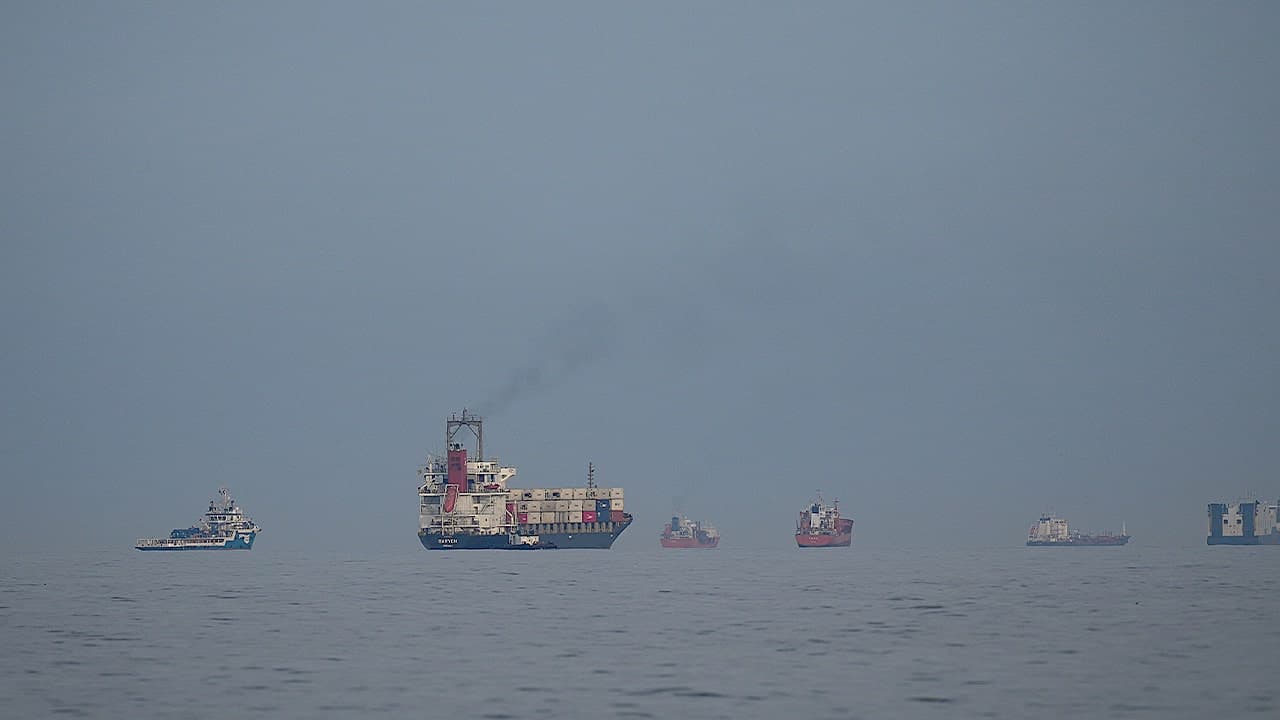
Iran tried to close the Strait of Hormuz in July. But the strait was already not working well as a commercial route. Many ships had problems with their GPS and AIS systems. They had to use radar to navigate. Iran showed that it can disrupt the satellite systems that the world relies on.
The US depends on the Global Positioning System (GPS). GPS is used for many things like credit card transactions, power grids, and navigation for ships and planes.
The GPS signal is weak and can be easily disrupted. It was designed in the 1970s when the technology was not as advanced. Now, the global economy and the US military rely on it. There have been many incidents of GPS jamming and spoofing.
General Jack Keane warns against trusting Iran on the Strait of Hormuz.
As a soldier, I know how important reliable navigation is. We used to take GPS for granted, but now it's not reliable. We need to upgrade our navigation systems to make them more secure.
Oil tankers and cargo ships are waiting in line in the Strait of Hormuz.
The GPS system cannot be fixed with small upgrades. Its weakness is due to its design and physics. A nearby jammer can always overpower the GPS signal.
China is developing its own navigation satellites that are more advanced than GPS. These satellites will provide stronger signals and be more resistant to electronic warfare.
China wants to dominate the navigation technology in the 21st century. The US Congress has noted that the US is falling behind China in this area.
The solution to this problem is not a slow government program. American companies are already working on new navigation technologies. They have launched satellites that provide stronger signals and are more resistant to jamming.
These new satellites can provide centimeter-level accuracy and work with existing GPS receivers. They can also resist spoofing and provide navigation even when GPS is not available.
The US Space Force understands the importance of this technology. They have canceled plans for a government-owned GPS system and are instead working with commercial companies.
The US government needs to take concrete steps to deploy this new technology. They need to fund the commercial LEO demonstration and follow-on services.
The US government should also procure operational services from commercial providers. They should contract for resilient navigation services and pay for proven performance.
The US government needs to set resilience standards for critical infrastructure. This includes navigation systems for ships, planes, and other vehicles.
In the past, the US bet on navigation satellites and it paid off. But now, the US needs to focus on resilient navigation capabilities to stay ahead.
The next era of navigation will belong to the country that focuses on fielding resilient capabilities. American companies have already made progress in this area.
The US government needs to move quickly to deploy this new technology. If they don't, they risk losing their advantage to another country.
Will Thibeau is the Director of the American Military Project and a veteran of the Army's 75th Ranger Regiment.