

Discover the Unique 'Dialects' of Vietnamese Modernist Architecture
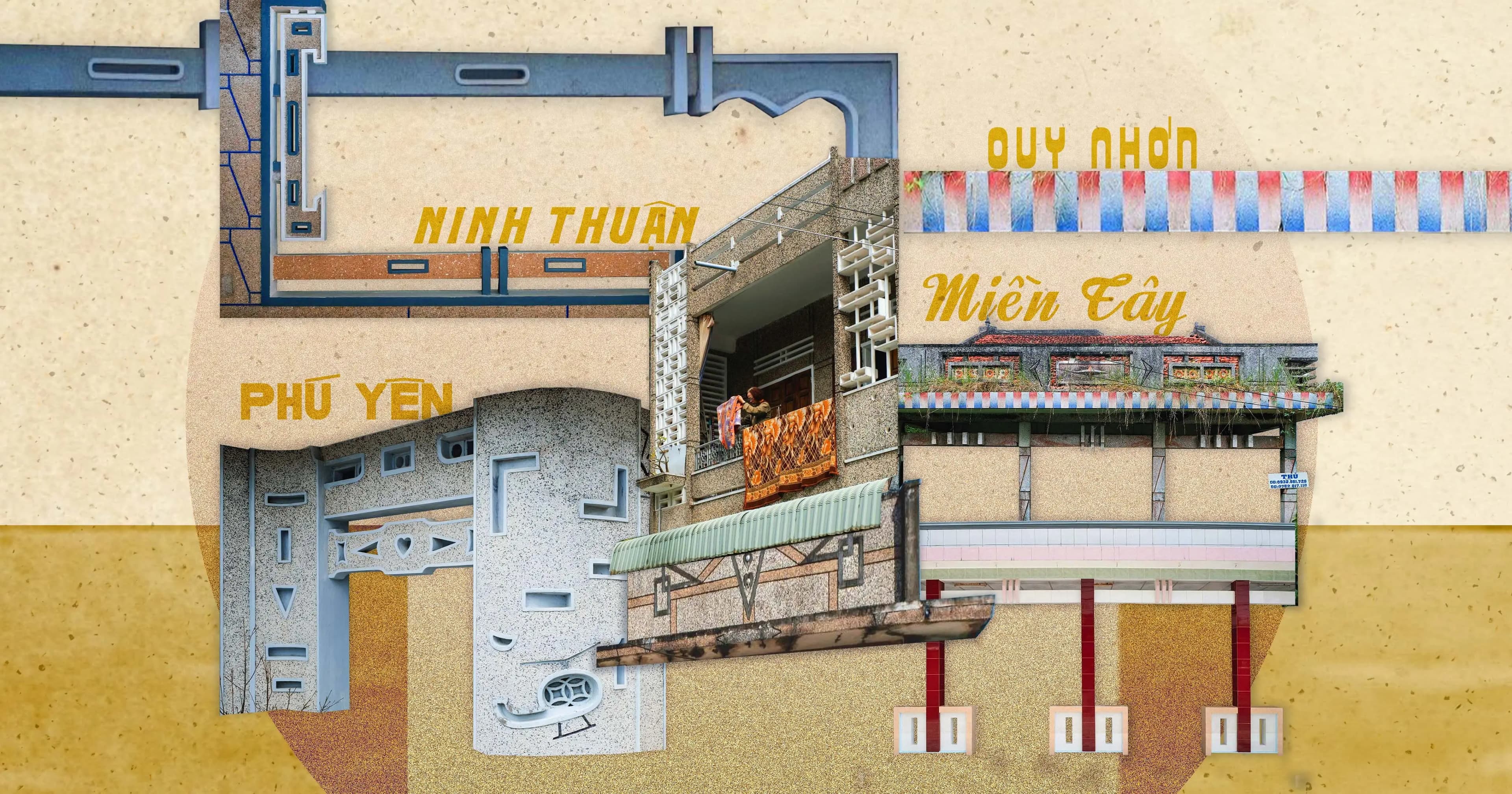
Modernism is a style usually used by architects. But in Vietnam, ordinary people also used it. It became a common way to build houses and villas in the south. Like any language, it developed its own accents.
After Vietnam gained independence in 1954, modernism became popular. The country needed to rebuild after years of war. Vietnamese architects chose modernism as a symbol of looking forward.
The modernist style quickly spread beyond architects. In Vietnam, people often build their own homes. They might like a feature from their neighbor's house and add it to their own. This is how the style spread and became common.
Southern Vietnam has its own modernist language, but each area has its unique features. These might come from local aesthetics or how each town deals with the sun and wind. Communities developed their own dialects, like accents or new slang.
Vietnamese vernacular modernism is a language from the streets, with unique features added by each builder. It's like learning a language and hearing different accents. Seeing many modernist houses in Vietnam, you'll start to notice the dialects.
In Quy Nhơn, the concrete lines of a brise-soleil are curved, unlike in Saigon. This shape can also be found in surrounding towns like An Nhơn.
There's a pastel-blue shophouse in Quy Nhơn city center.
A shophouse in Quy Nhơn city center has đá rửa finishing.
A villa in An Nhơn was built in 1987.
There's a shophouse on Trần Hưng Đạo street in Quy Nhơn city center.
In Phú Yên, houses have many ventilation holes, including triangles and hearts. This style was also used in Quy Nhơn, but not as much.
A villa in Xuân Lộc has a perforated red beam.
A villa in Xuân Lộc has blue-contoured motifs and holes on its façade.
A villa in Xuân Lộc has a helicopter motif among its geometric shapes.
A villa in Xuân Lộc has white-contoured motifs along its whole house.
A villa in Xuân Lộc has yellow and white tiled walls.
A villa in Xuân Lộc has purple contours around its holes.
In Vĩnh Hải, concrete shading devices are curled and have a hook shape. They're outlined with a raised contour, often painted blue or white.
A villa in Mỹ Tân has a façade engraved with plants and flowers.
A villa in Mỹ Tường was built in 1990, with the date on its porch.
A villa in Mỹ Tân was built in 1989, with blue-painted details.
A villa in Mỹ Phong has a street restaurant in front.
In the Mekong Delta, modernist houses often have a porch and four columns. The beam above is held by concrete fins, creating a unique structure.
A villa in Vĩnh Long has a frieze with diamond shapes and pierced patterns.
A villa in Mỹ Nhơn has many decorative elements, including engravings and pierced friezes.
A villa in Bến Tre has compass-rose motifs along its beam.
An abandoned villa in Sa Đéc is for sale.
A villa in An Thạnh Thủy has a façade entirely covered in tile.