

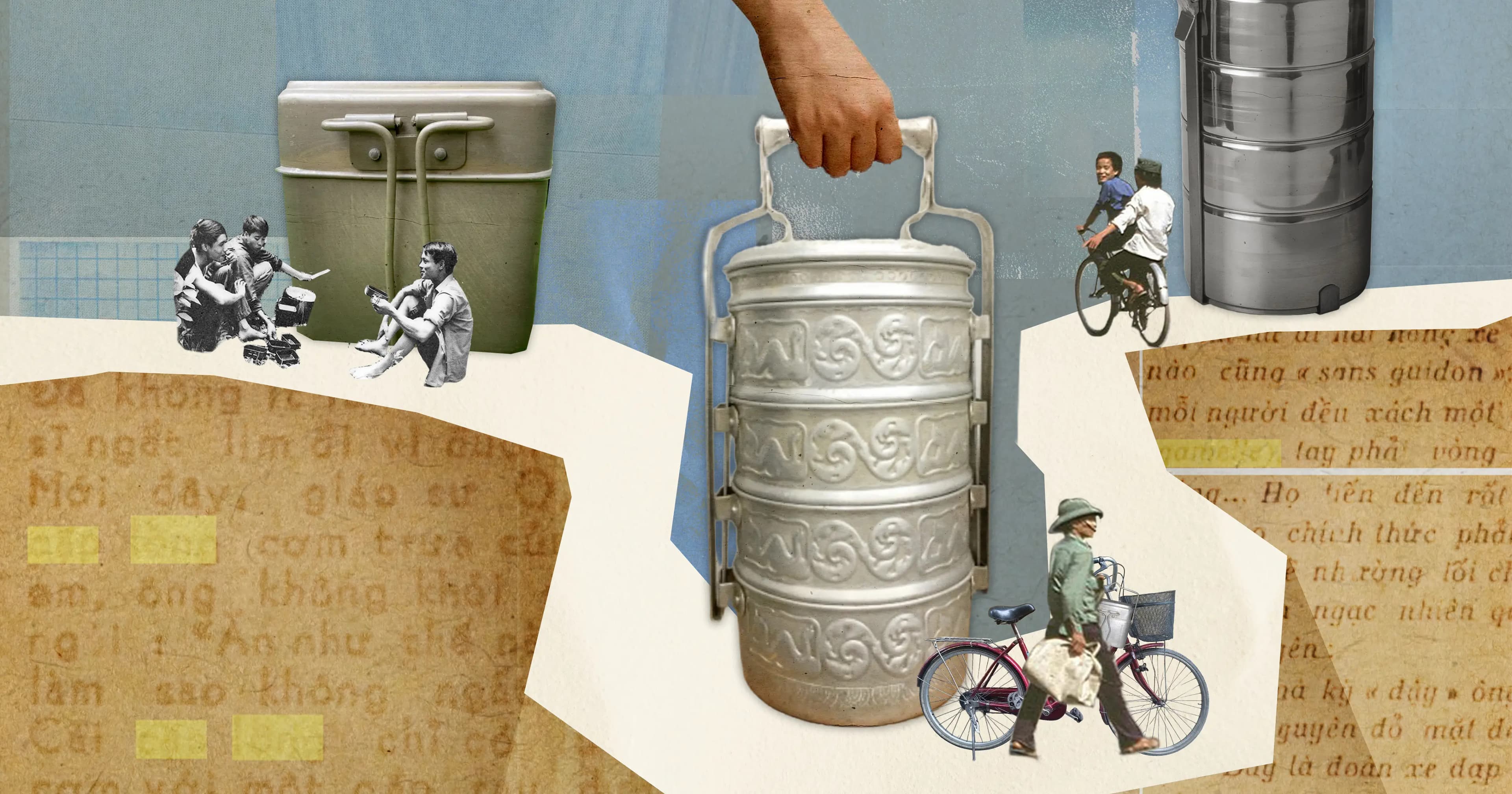
How the Cà Mên Lunchbox Mirrors Vietnam’s War, Subsidy Crisis, and Post‑Đổi Mới Recovery
Cà mên: Từ chiến trường Pháp đến gánh hàng rong
Nguồn: Saigoneer
The cà mên began as the French “gamelle”, a metal food container first produced in the mid‑19th century. French soldiers used it during World War II, and the design later spread across Vietnam.
When the French occupied Vietnam, the lunchbox became a staple in Saigon’s cơm tháng eateries, where workers could pay for a month’s worth of meals. The container even appeared in the 1938 satirical newspaper Vịt Đực, illustrating its everyday presence.
Vietnamese troops also adopted the cà mên, often covering it with fabric to hide reflections from enemy spotlights. Its durability made it useful for storing rations, heating food, and serving as a bowl on the front lines.
In the planned‑economy subsidy era of the late 1970s and 1980s, rice was extremely scarce. Historian Đặng Phong notes that in March 1978 a Hanoi resident could buy only four kilograms of rice per month, forcing families to fill cà mên with just a little rice, noodles and boiled vegetables.
Writer Đỗ Phấn recalls a 1985 incident: a dropped cà mên spilled only a thin, cake‑like layer of rice mixed with noodles that rolled across the street. The story highlights how meagre the meals had become during the subsidy period.
After the Đổi Mới reforms of the late 1980s, the economy opened and food supplies improved. The quality of dishes packed in cà mên rose, offering richer home‑cooked meals, yet the container stayed popular in casual rice eateries and street stalls.
Today the cà mên is a nostalgic reminder of Vietnam’s past hardships and its progress. While it no longer signals scarcity, it still carries the memory of a nation that turned a military lunchbox into a daily symbol of resilience.
Bạn đã đọc xong bài này
Từ trong bài này
10 từ gợi ý · 0 từ đã tra
Từ gợi ý
Từ bạn đã tra
Bạn chưa tra từ nào trong bài này.
Luyện tập bài này
Luyện tậpĐọc tiếp
 Latest NewsXã hội · A2 · 1 phút đọc
Why Thuan An Ward Stops New Tombs
Vì sao phường Thuận An cấm xây mộ mới
 Latest NewsGiáo dục · B1 · 2 phút đọc
Standardized Exams for Grades 5, 9 and 12: What It Means for Students, Teachers and Schools
Kỳ thi cuối kỳ thống nhất cho lớp 5, 9 và 12: Tác động đến học sinh, giáo viên và nhà trường
 Latest NewsXã hội · B1 · 1 phút đọc
Ho Chi Minh City Uses Fireworks and 3D Mapping to Celebrate Vietnam Culture Day
TP.HCM bắn pháo hoa, trình chiếu 3D mừng Ngày Văn hóa Việt Nam