

Why the ‘Expat’ Debate Reveals Hidden Power Dynamics in Vietnam’s Migration Landscape
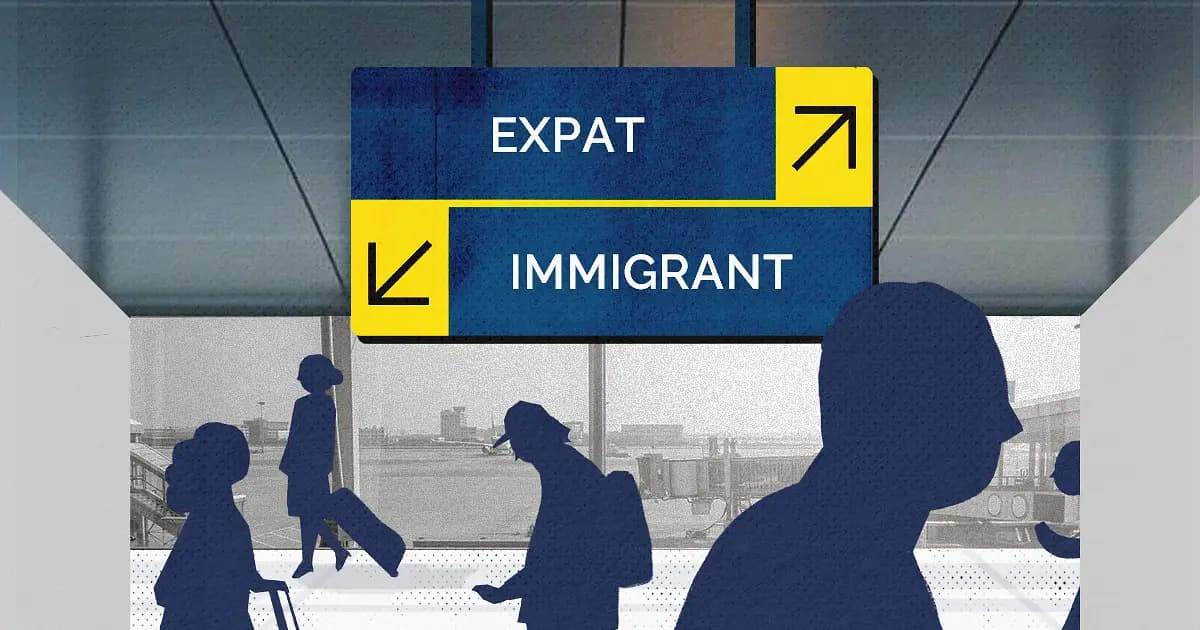
Yet the term is not intrinsically racist; it can be racialized when used to draw a privileged‑white line. Non‑white expatriates do exist—for instance, South Asian expatriates who served in British colonial administrations in East Africa illustrate that the category is not exclusively white.
The Cambridge Dictionary defines an expatriate as someone who moves across national borders with an indeterminate length of stay, whereas an immigrant is characterized by an intention to settle permanently. Academic literature often treats expatriates as a subset of migrants, but popular usage frequently reserves the term for “rich, educated, developed elites.”
Historically, the expatriate figure has shifted through three paradigms: first, colonial expatriates such as British officers in India; second, corporate expatriates—intracompany assignees dispatched by U.S. multinational corporations after World War II; and third, the self‑initiated expatriate that emerged in the 1980s‑90s neoliberal turn, encompassing digital nomads, English teachers and freelancers.
In Vietnam, the Đổi Mới reforms opened the economy to foreign capital, producing a sizable Asian business expatriate cohort from China, South Korea and Japan, while Western newcomers are more often portrayed in lifestyle‑focused media. Korean expatriates, for example, tend to cluster in District 7, whereas Western expats appear in lifestyle profiles that emphasize leisure rather than work.
Fred Wissink, producer of the “Expats In Ho Chi Minh City” series, observes that Korean expatriates “are very closed off. It’s a 100,000‑person strong community, but they’re all in District 7… They have their own group and don’t have to deviate outside it to do business or live comfortably. Outside of the Korean community, there’s an estimated 50,000 expats in Saigon,” underscoring how racialized narratives shape intra‑expat perceptions as well.
Thus, the seemingly neutral label ‘expat’ functions as a linguistic marker of privilege and racial hierarchy, reminding us that migration discourse in Vietnam—and globally—must be interrogated for the power structures it silently sustains.