

From Bamboo Frames to the Eye‑Dot: Inside Saigon’s Lion‑Dance Costume Workshop
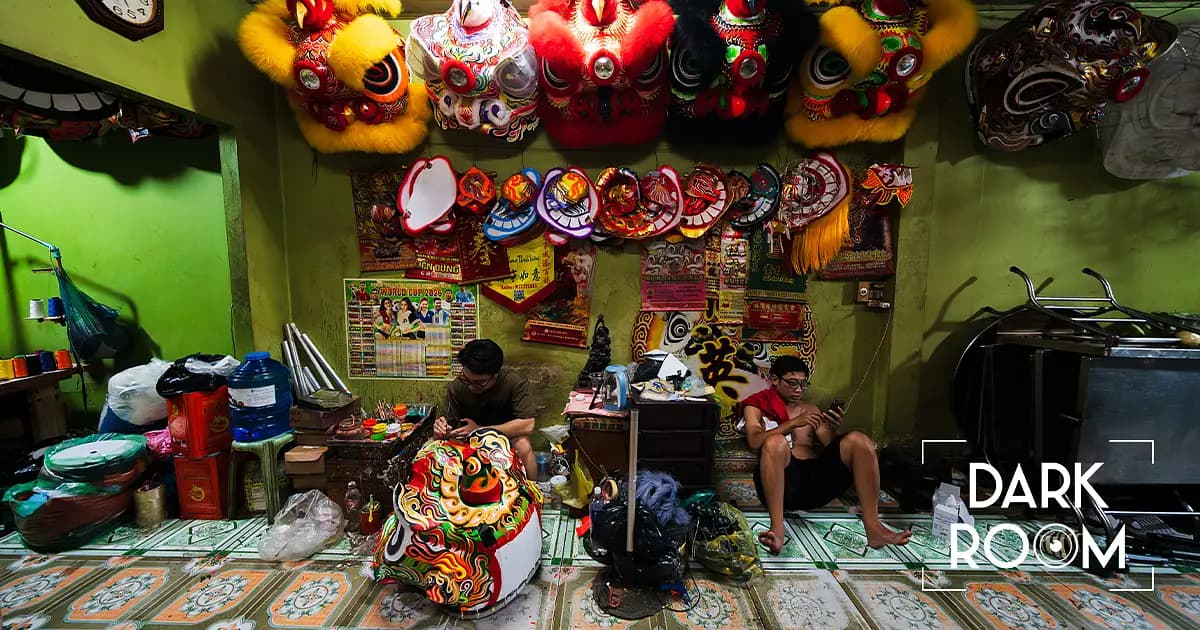
The lion head starts with a frame made of bamboo, rattan and thin wire. Once the skeleton is sturdy, sheets of rice paper are glued onto it and left to harden. After the paper dries, artisans hand‑paint the intricate patterns. This whole head‑making process can take up to five days.
The body of the costume is assembled in the two days that follow the head work. When finished, a full lion costume sells for VND5–7 million. Buyers include customers across Vietnam and overseas markets such as France, the United States, Malaysia, Singapore, Hong Kong and Thailand.
Newer lion heads often feature lighter frames, modern glues that hold paint better, LED lights, stainless‑steel teeth and design cues from Malay, Chinese and Hong Kong patterns. Still, Hùng says, “I prefer the traditional one more. The traditional one, looking at it, gives you a vintage lion feel.”
On an auspicious day, Hùng and his team perform the eye‑dot ceremony, dotting the lion’s pupil to give it spiritual energy before it can dance.
The careful planning, hand‑painting and final ritual show why each costume is more than a costume – it is a piece of living heritage that travels from a Saigon workshop to festivals around the world.