

Why Saturn’s Tilt and Jet Stream Created a New Decagon Cloud Wave
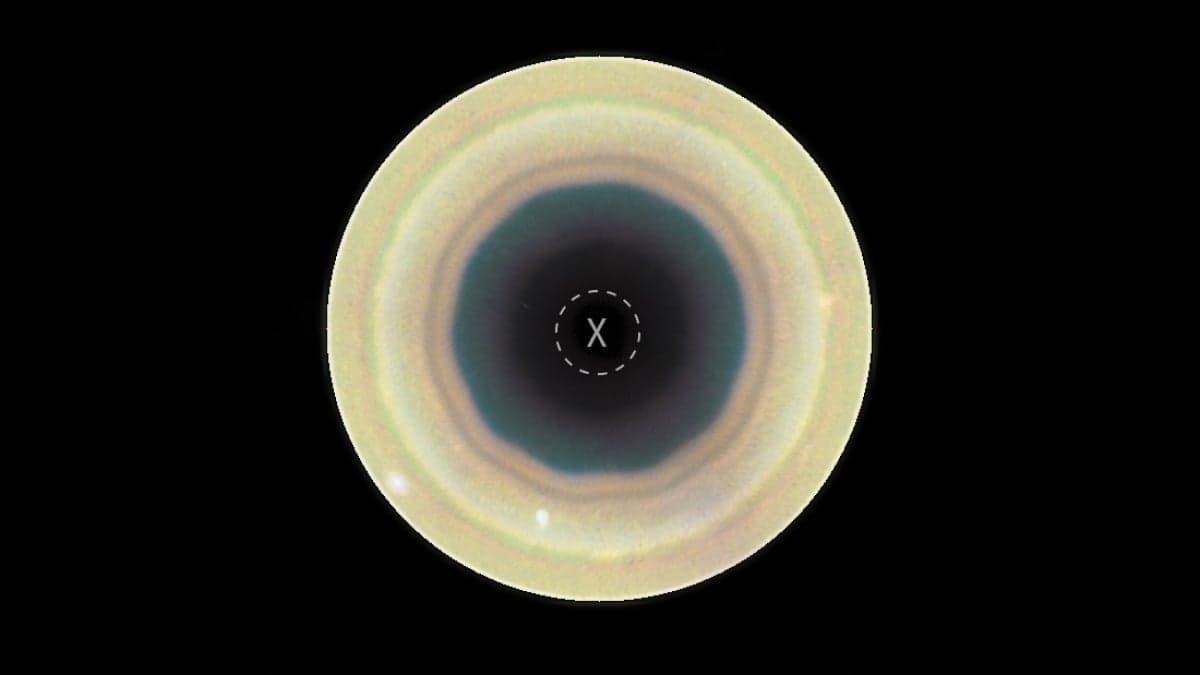
The pattern became visible because Saturn’s axial tilt turned the south pole toward Earth, giving the Hubble Space Telescope and large ground‑based observatories a clear view that had been impossible for more than a decade.
The decagon is not a solid ring of clouds; it is an atmospheric wave – a standing bend in the powerful jet stream that races around the planet at roughly 260 mph. Each side stretches about 10,000 miles, and the corners drift back and forth on a month‑long cycle.
A red‑spot storm just north of the wave appears to strengthen the nearby corners, suggesting the storm may help trigger or modify the wave. Computer simulations that reproduced a strong, curved jet showed that a small disturbance can generate polygonal waves similar to the observed decagon.
The southern decagon is unlike Saturn’s well‑known north‑pole hexagon, which has been stable since the 1980s. The decagon is more fleeting; its corners change strength and position, and Cassini images from 2004‑2017 showed no sign of such a structure.
Scientists, including Amy Simon, a co‑author from NASA’s Goddard Space Flight Center, and Agustín Sánchez‑Lavega, the study’s lead author, say the sudden appearance offers a rare chance to study how a planet’s tilt and jet‑stream dynamics can sculpt winds into geometric shapes.