

Did the Sun Swallow a Super‑Earth? How Lithium and Sound Waves Reveal a Hidden Planetary Feast
The Sun’s surface now contains over 100 times less lithium than expected from its original composition, a clue that some process has dragged lithium deep into the star.
The hypothetical planet, which Yildiz named Dev Dilek, would be poor in lithium but rich in heavier elements. When its material mixed into the Sun’s outer layers, the resulting composition brings the simulated solar interior—especially sound‑wave patterns and the depth of the convection zone—into closer agreement with observations.
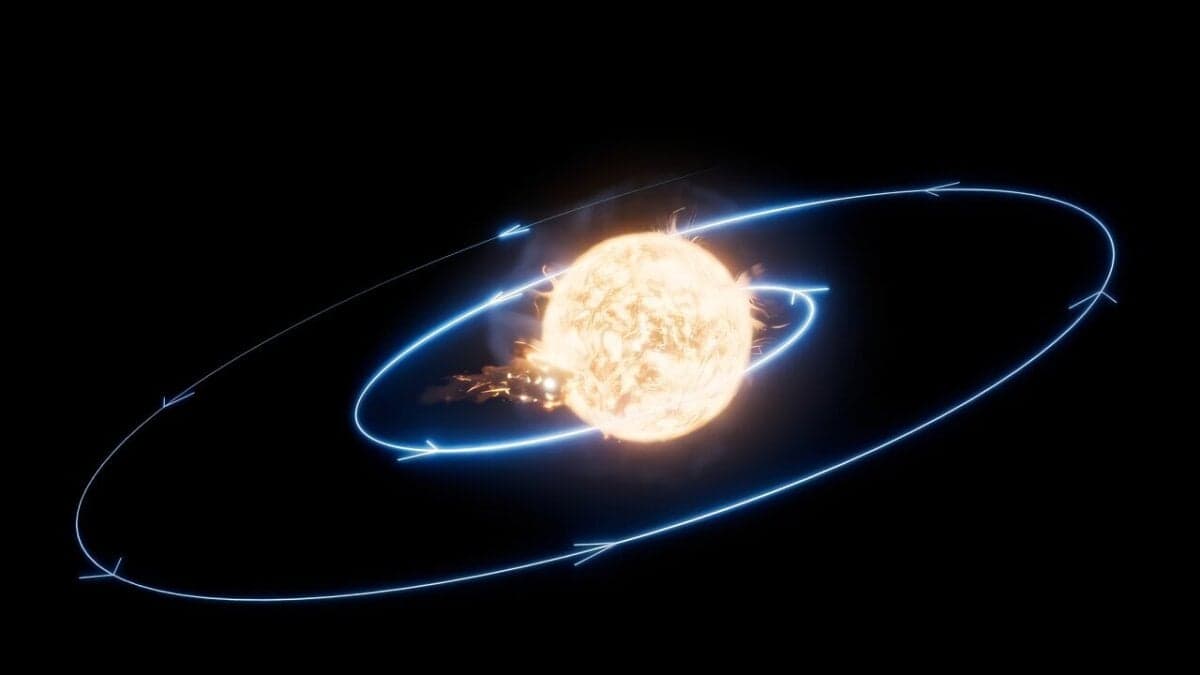
Simulations also tracked the planet’s plunge through hot solar gas. They show the world loses only a fraction of its mass before it reaches the base of the convection zone, meaning most of its rocky core would be deposited exactly where the solar models need extra heavy elements.
The research was published in Monthly Notices of the Royal Astronomical Society. Yildiz said, “We believe it could,” referring to the Sun’s ability to retain evidence of having eaten a planet.
If the Sun did indeed ingest Dev Dilek, the event would explain the unusually low lithium on its surface and would improve the fit between theoretical models and the Sun’s actual interior structure. This offers a compelling new way to read the Sun’s hidden past.