

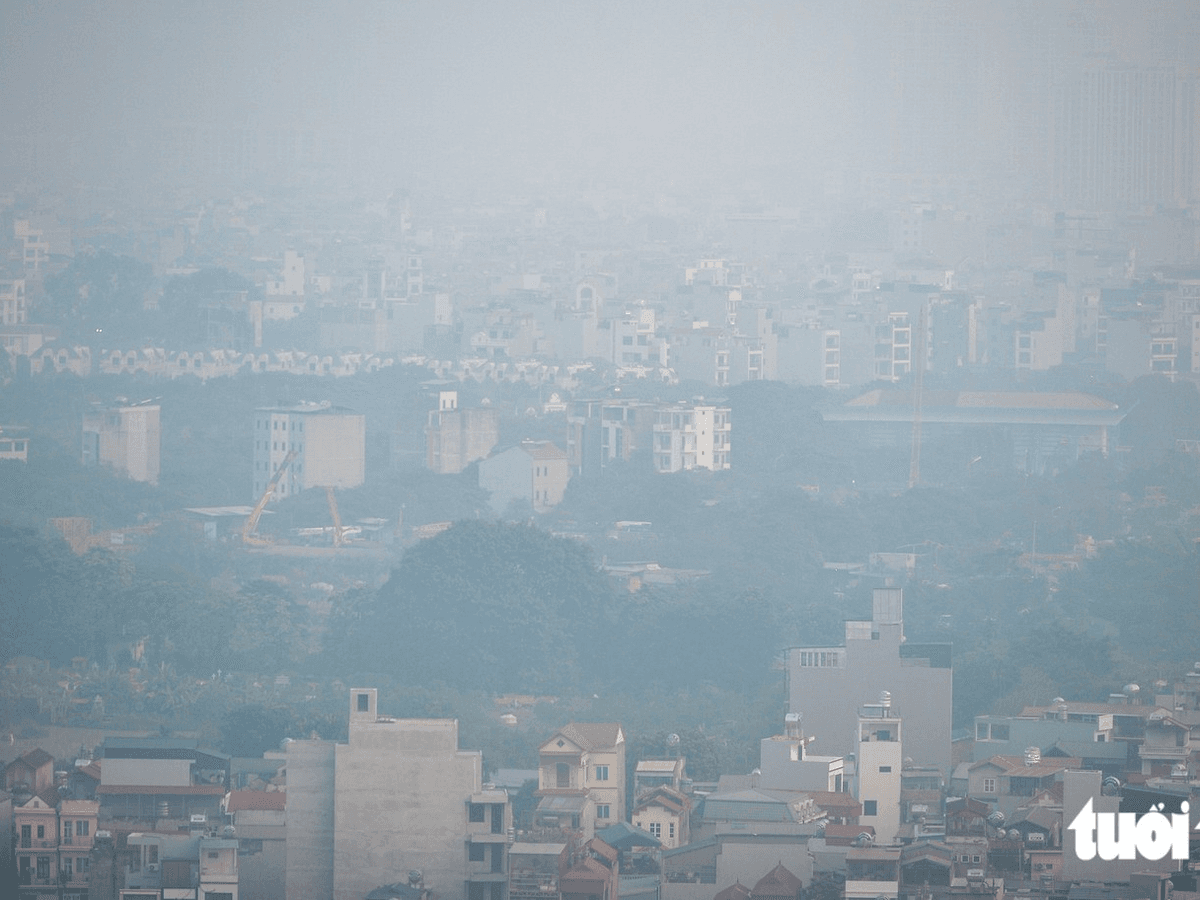
Red‑Level Air in Hanoi: How the Haze Impacts Health and Daily Life
Không khí Hà Nội chạm ngưỡng đỏ: Bụi mịn ảnh hưởng sức khỏe và sinh hoạt
Source: Tuoitre
On Thursday morning, a dense haze covered parts of Hanoi as air‑quality monitors recorded red‑level readings. The situation is serious enough to affect everyday activities.
Air‑quality stations on Thang Long Boulevard, Pham Hung Street, Nguyen Trai Street and Nguyen Chi Thanh Street all reported an AQI in the red zone, which indicates unhealthy conditions for the general public. These readings signal that the concentration of pollutants, especially fine particles, has exceeded safe limits.
Mai Uyen, an 18‑year‑old student at the University of Science, Vietnam National University, Hanoi, said the haze was clearly visible on the streets. She usually takes the bus to campus and wears a face mask while walking from the bus stop to protect herself from dust.
Vu Xuan Dinh, an 85‑year‑old resident, complained that the city’s air feels stuffy and dusty, a problem that especially troubles older people. Environmental expert Hoang Duong Tung, chairman of the Vietnam Clean Air Network, warned that the red AQI poses health risks and that lowering the index from red to a better level within a single day is very difficult.
According to Hoang Duong Tung, Hanoi’s pollution typically peaks from October through March or April because the weather prevents dust from rising, while ongoing construction and heavy traffic release large amounts of PM2.5. These fine particles remain close to the ground, making the air feel heavy and hazardous. Even if emissions drop or it rains, the improvement is usually modest and short‑lived.
The red‑level air quality in Hanoi therefore forces residents of all ages to change their daily routines and exposes them to health hazards. Because the index cannot be lowered quickly, long‑term collective actions are needed to protect public health.
You finished this article
Words from this article
8 recommended words · 0 looked up
Recommended
You looked up
You haven't looked up any word in this article yet.
Practice this article
PracticeRead next
 Latest NewsSociety · A2 · 1 min read
Why Thuan An Ward Stops New Tombs
Vì sao phường Thuận An cấm xây mộ mới
 Latest NewsSports · B1 · 2 min read
From Battlefield Injury to Asian Para‑Archery Champion: Toman Kumar Taram’s Journey
Từ thương tích chiến trường đến Hạng nhất Cờ vua Para châu Á: Hành trình của Toman Kumar Taram
 Latest NewsEnvironment · B1 · 2 min read
Bamboo and Oyster‑Shell Barriers: How a Simple Nature‑Based System Reduces Flood Waves
Rào chắn tre và vỏ hàu: Hệ thống dựa trên thiên nhiên đơn giản giúp giảm sóng lũ